
 EN
EN
 AR
AR
 BG
BG
 HR
HR
 DA
DA
 NL
NL
 FI
FI
 FR
FR
 DE
DE
 EL
EL
 HI
HI
 IT
IT
 JA
JA
 KO
KO
 NO
NO
 PL
PL
 PT
PT
 RO
RO
 RU
RU
 ES
ES
 SV
SV
 TL
TL
 ID
ID
 SR
SR
 UK
UK
 HU
HU
 TH
TH
 TR
TR
 GA
GA
 BE
BE
 BN
BN
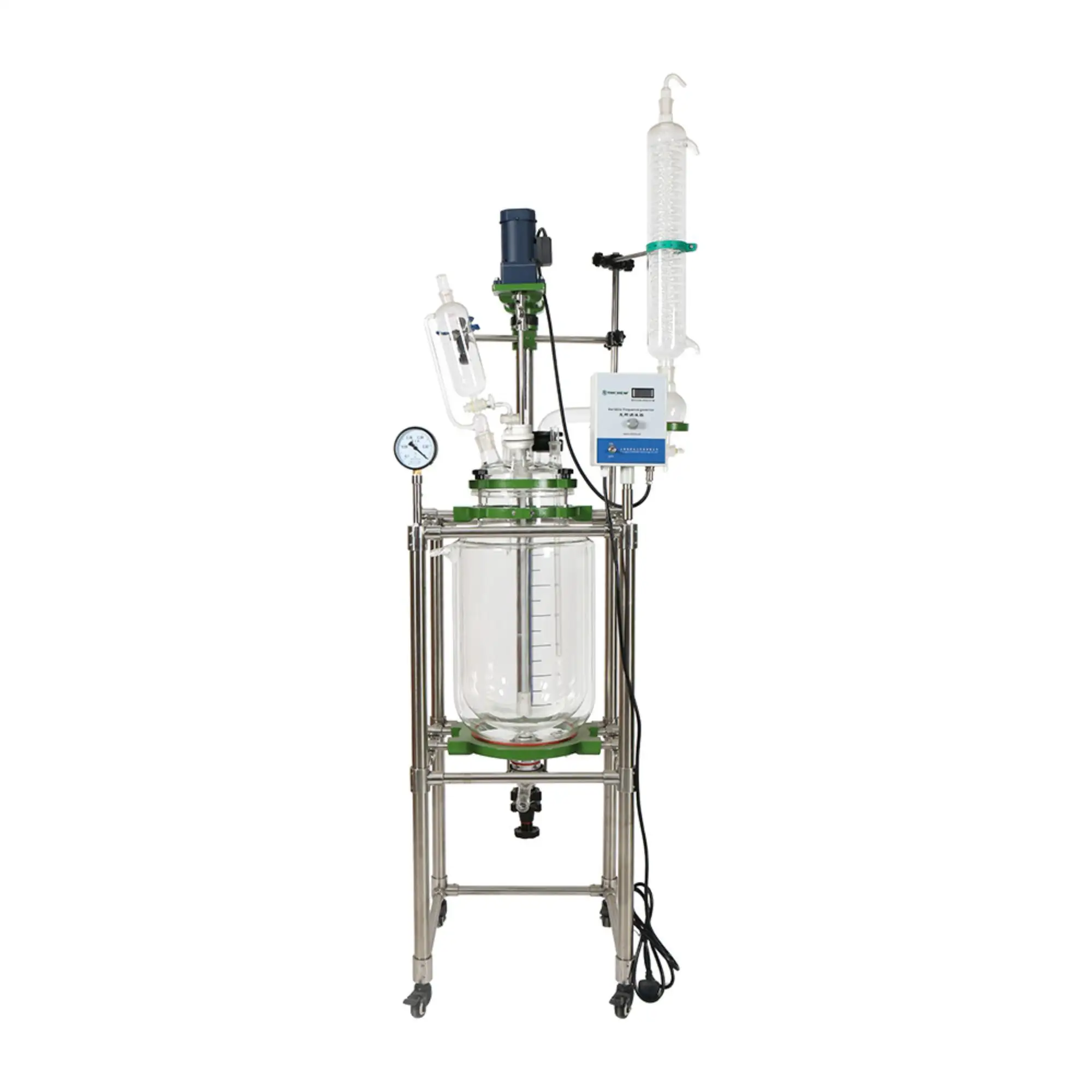
Glass reactors are a vital part of laboratory and industrial processes, where such crucial processes as solvent recovery, purification, mixing, and reaction are required. The design philosophy of YHCHEM is based on modularity to achieve reliability, safety and repeatability. These qualities cannot be maintained and cleaned to improve the existence of your investment. More than 10,000 systems have been already supplied all over the world in the past 15 years and YHCHEM has developed best practices that ensures that your glass reactor would be in its optimum state.Here is a cleaning and maintenance manual of your glass reactor.
Daily Cleaning Protocols
Long life is based on immediate and gentle cleaning. The residues should be removed after each experiment and they should not be allowed to harden or cake on the surface of the glass.
Cool Down First: It is also a good practice to make sure the reactor has been cooled down to a room temperature before cleaning it or the reactor will undergo a thermal shock.
Wipe with Proper Solvents: Wipe the inside of the chamber, the condenser and the stirring shaft with a solvent that is compatible with the solution that was used (i.e. water with an aqueous solution, ethanol or acetone with organic compounds).
Light Brushing: Soft brushes or sponges should be used for hard deposits. Never use metal brushes, scrapers, hard tools scratches, may lead to weak spots and cracking and loss of transparency.
Last Rinse: Add a lot of deionized or distilled water in order to remove any leftover cleaning agents and solvents.
Protecting Glass and Seals
The reliability of your reactor depends on the integrity of the glass and the condition of its seals.These parts should be checked and serviced regularly to do away with accident and leakages.
Check for Damage: Inspect for Damage: Visually inspect the glass vessel before and after each use for any chips, cracks, or deep scratches. If any damage is found, take the component out of service immediately.
Seal Maintenance: The sealing rings (PTFE or silicone are typically used) are highly important in maintaining a vacuum or pressure. Make sure that the seals are flexible by wiping the seals and rubbing a thin layer of vacuum grease or silicone grease on the seals to have a good seal. Replace seals immediately if you notice any signs of cracking, deformation, or loss of elasticity.
Do Not Over tighten: Clamps and connections should be tight but not too tight because they can break glass joints of destroy PTFE components. It should be a strict relationship rather than a forced relationship.
Preventing Thermal Shock
Borosilicate glass is a chemically resistant material that is not able to adapt to extreme changes in temperature. Among the most frequent causes of disastrous reactor malfunction, one should count thermal shock.
Slow Temperature Varying: Changes of temperature whether warming or cooling occur slowly. The heating and cooling rate should be maintained at the ≤5 °C/min in order to prevent glass stress.
Work between Limits: the temperature and pressure limits being proposed by the manufacturer must never be overworked. This overturning of these limits compromises the structural integrity of the vessel.
Maintain Heating/Cooling Baths: Ensure that oil or water baths are filled with a clean, suitable medium and are functioning correctly to provide uniform heat transfer to the glass vessel.
Post-Operation and Storage
The storage of the equipment is a large process just as the use of the equipment.
Blow out the glass: Clean all the glass parts by dry them with a soft, lint-free cloth or leave them to dry in the air in a dust-free place. This does not allow the spots of water and cannot allow the growth of mold.
Store Disassembled or Protected: To avoid taking the joints of the ground-glass, insert a scrap of paper between them, or take pains to be sure they are clean and dry before they are reassembled. The reactor should be stored in a well-ventilated dry area that does not harbor any fumes that might be corrosive.
Loosen PTFE Valves: PTFE valves are not tightened in case the reactor will not be long term utilized. The PTFE is deformable because of long durations of time in which the product has remained closed.
Engineering for the Long Term
Having such maintenance arrangements will guarantee you good glass reactor that will bring the consistency and steadiness of performance throughout the years. You need a plain benchtop unit, or a complicated pilot scale system, YHCHEM might give a good design, with its rationalized engineering requirements.
Meanwhile, the 100L industrial in combination with a range of glass reactors will visit YHCHEM's site or call to our assortment of 1L lab through 100L industrial.