
1. Introduction to Silicone Oil Silicone oil refers to liquid polyorganosiloxanes with Si-O-Si as the main chain. Dimethyl silicone oil is the most common type. It is colorless and transparent, physiologically inert, resistant to high and low tempera...
Share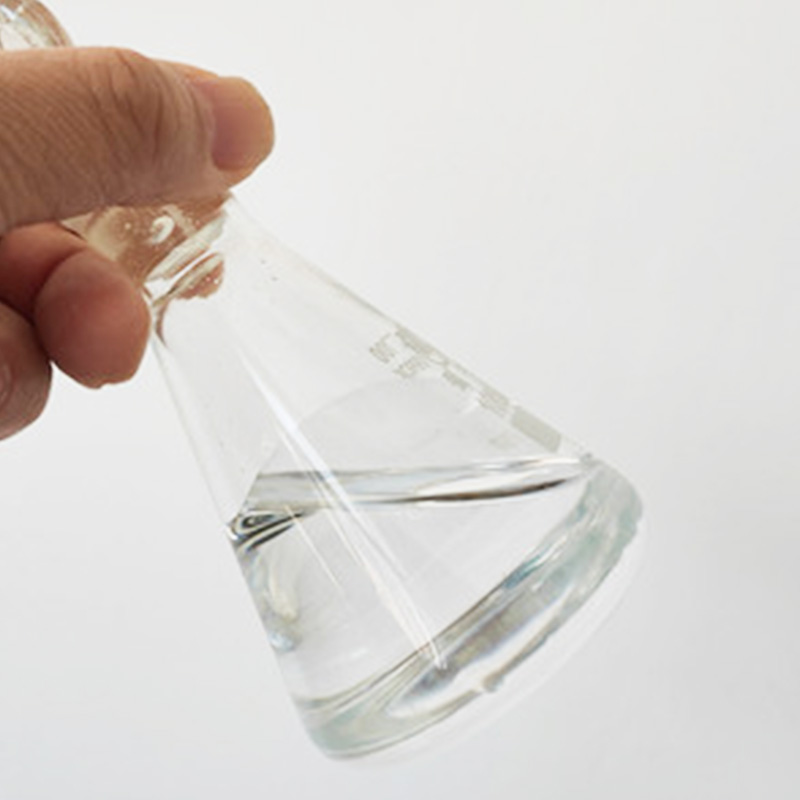
1. Introduction to Silicone Oil
Silicone oil refers to liquid polyorganosiloxanes with Si-O-Si as the main chain. Dimethyl silicone oil is the most common type. It is colorless and transparent, physiologically inert, resistant to high and low temperatures, insulating and hydrophobic, and features stable viscosity. It is widely used as industrial heat transfer medium, plastic release agent, smoothing substrate for daily chemicals, and electronic insulating impregnating liquid, meeting the production demands of multiple industries.
2. Four Major Pain Points of Silicone Oil Purification & Solving Logic of Molecular Distillation
Pain Point 1: Silicone oil contains large amounts of low-molecular cyclic siloxane impurities (D4/D5/D6, etc.), which cannot be thoroughly removed by conventional distillation and severely downgrade product quality
The polymerization of silicone oil is a reversible equilibrium reaction. Finished products naturally retain 12%~14% low-molecular cyclic siloxanes (D3~D20), unreacted monomers, solvents and short-chain low-molecular siloxanes.
Low-grade silicone oil: Conventional vacuum rectification can only remove partial light small molecules, with residual volatile matter ranging from 1% to 3%.
High-end scenarios (electronics, medical treatment, optics) impose strict requirements on low-molecular residues ≤100 ppm. Residual small molecules will continuously volatilize, causing insulation failure of electronic contacts, lens fogging, and irritation to human bodies due to precipitation from medical implants.
Shortcomings of conventional rectification: Separation relies solely on boiling point difference. High-molecular cyclic siloxanes have boiling points exceeding 400°C, while the maximum heating temperature of conventional negative pressure towers is 250°C, making vaporization and separation impossible, thus leaving a large amount of impurities.
Targeted Solution Logic
Molecular distillation achieves separation based on the difference in molecular mean free path instead of boiling point alone:
The equipment maintains high vacuum (0.001~1 Pa) to greatly extend the mean free path of material molecules.
Light component small molecules escape and fly directly to the built-in condenser for recovery; macromolecular silicone oil has a short mean free path and cannot reach the condensation surface, flowing out along the heating wall as finished products.
Multi-stage molecular distillation can reduce low-molecular impurities to below 100 ppm, lowering volatile matter from 1.5% to less than 0.3%, satisfying strict purity standards for electronic and medical-grade products.
Pain Point 2: Silicone oil is a thermosensitive polymer; prolonged heating at high temperature causes cracking, oxidation, cross-linking and discoloration, and the Si-O main chain of silicone oil is prone to breakage under high temperature
When the temperature exceeds 260°C with long residence time, molecular chains break to generate more small molecules, resulting in permanent deterioration of product viscosity and stability.
Residual trace acid-base catalysts combined with high temperature trigger reverse polymerization and continuous decomposition of silicone oil.
Oxidation occurs when exposed to air at high temperature, turning products yellow and reducing transparency, losing the value of high-end products.
Conventional vacuum rectification retains static accumulated materials inside the reactor with heating time of dozens of minutes. To vaporize high-boiling impurities, the temperature has to be raised to 240~280°C, leading to massive thermal oxidation and cracking of materials and impaired finished product quality.
Targeted Solution Logic
Low-temperature separation: High vacuum reduces the required separation temperature by 80~150°C compared with conventional distillation, far below the critical temperature for silicone oil thermal cracking.
Extremely short heating duration: The scraper forms an ultra-thin liquid film of 0.01~0.1 mm by force, and materials only stay in the heating zone for several seconds to more than ten seconds, with almost no risk of thermal degradation.
Fully closed high-vacuum oxygen-free environment to isolate oxidative effects from air, completely preserving the transparency and thermal stability of finished products.
Pain Point 3: Silicone oil features high viscosity; conventional equipment delivers extremely low heat transfer efficiency, prone to local overheating and foaming entrainment
Medium and high-viscosity silicone oil has poor fluidity, and conventional vacuum reactors and packed towers have fatal defects:
Thick materials lead to poor heat transfer, local overheating and coking at the reactor bottom, and coked substances on the wall contaminate products.
A large amount of foam is generated during heating and boiling, and foam entrains macromolecular silicone oil into distillate, resulting in a sharp drop in finished product yield.
The diffusion rate of small molecules to the liquid surface in static liquid phase is slow, leading to low separation efficiency, requiring repeated rectification for 3 to 5 times and doubling energy consumption and labor costs.
Targeted Solution Logic
Forced film formation by scraper: The rotor scrapes materials at high speed to form a uniform ultra-thin liquid film on the inner wall of the evaporator, boosting heat and mass transfer efficiency by dozens of times without local high-temperature hot spots.
Boiling-free separation: Molecular distillation relies on free surface evaporation without violent boiling and foaming, eliminating entrainment of macromolecular silicone oil by foam and stabilizing finished product yield above 95%.
The ultra-thin liquid film accelerates the diffusion and escape of small molecules; one-time separation can achieve the purification effect equivalent to 3~5 times rectification of conventional equipment, greatly shortening the process flow.
Pain Point 4: Conventional purification processes feature low yield, difficult recovery of by-products, heavy pressure on environmental protection and high costs
Repeated high-temperature cracking in conventional rectification causes massive loss of silicone oil decomposition, with main product yield only 70%~80%.
Removed cyclic siloxanes such as D4/D5 are high-value raw materials, but conventional towers deliver poor separation purity, making recycling impossible. They can only be treated as hazardous waste, causing raw material waste and high solid waste disposal costs.
Some processes require water washing and solvent extraction to remove impurities, generating large quantities of saline organic wastewater and high environmental treatment costs.
Targeted Solution Logic
Low temperature and short heating time minimize thermal damage, with silicone oil main product yield ≥92%.
Light component small molecules are separately condensed and collected. D4/D5 with high purity can be directly returned to the polymerization process for recycling, improving raw material utilization rate.
Pure physical separation without solvent addition, no wastewater generated in the whole process, simplifying post-treatment environmental protection procedures.
Continuous and automatic production is available. Compared with batch vacuum reactors, the energy consumption and labor cost per unit product are significantly reduced.

 EN
EN
 AR
AR
 BG
BG
 HR
HR
 DA
DA
 NL
NL
 FI
FI
 FR
FR
 DE
DE
 EL
EL
 HI
HI
 IT
IT
 JA
JA
 KO
KO
 NO
NO
 PL
PL
 PT
PT
 RO
RO
 RU
RU
 ES
ES
 SV
SV
 TL
TL
 ID
ID
 SR
SR
 UK
UK
 HU
HU
 TH
TH
 TR
TR
 GA
GA
 BE
BE
 BN
BN


