
 EN
EN
 AR
AR
 BG
BG
 HR
HR
 DA
DA
 NL
NL
 FI
FI
 FR
FR
 DE
DE
 EL
EL
 HI
HI
 IT
IT
 JA
JA
 KO
KO
 NO
NO
 PL
PL
 PT
PT
 RO
RO
 RU
RU
 ES
ES
 SV
SV
 TL
TL
 ID
ID
 SR
SR
 UK
UK
 HU
HU
 TH
TH
 TR
TR
 GA
GA
 BE
BE
 BN
BN
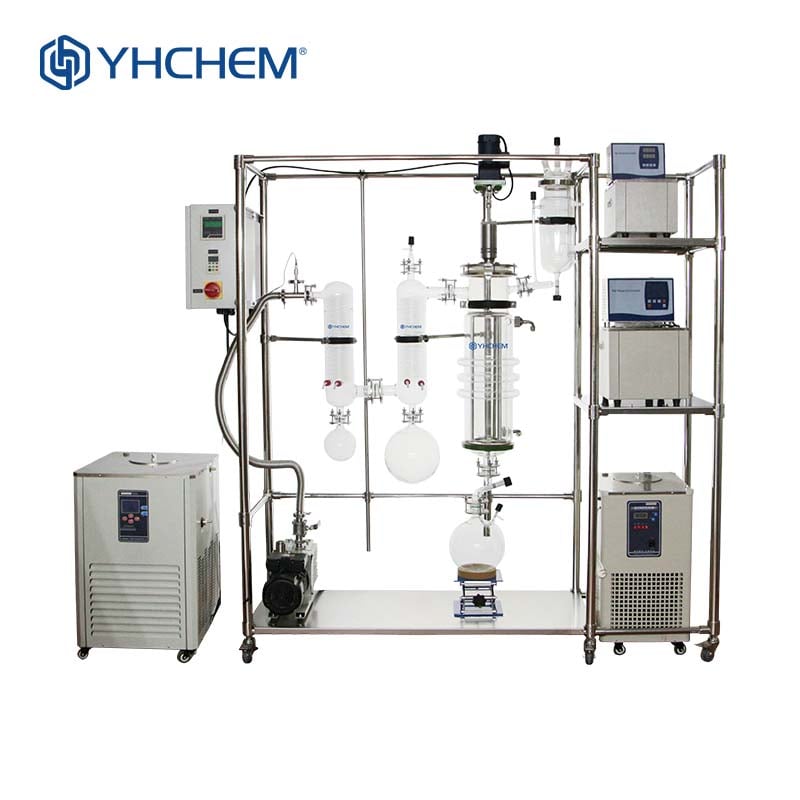
|
Wiped film evaporation is generally better suited to bulk solvent removal, light-end removal and concentration. Molecular distillation is more appropriate for selected high-boiling, heat-sensitive or high-value separations under deeper vacuum. For complex feeds, wiped film evaporation can be used as pretreatment before molecular distillation. |
Why Are These Two Technologies Often Confused?
Molecular distillation and wiped film evaporation can look similar from the outside. Both commonly use a rotating wiper or rotor to spread the feed into a thin film on a heated surface, and both are used for materials that can be difficult to process in a conventional batch evaporator.
The key difference is not simply the presence of a wiper. The two systems are designed around different separation objectives, pressure levels and vapor-condensation paths. Understanding those differences is more useful than relying only on equipment names.
1. What Is Wiped Film Evaporation?
A wiped film evaporator continuously distributes feed onto a heated wall and mechanically renews the liquid film. Volatile components evaporate from the film, leave the evaporation chamber and are condensed in a downstream condenser.
This design is especially useful when conventional kettle evaporation becomes inefficient because of viscosity, heat sensitivity, fouling tendency or the need for continuous operation.
2. What Is Molecular Distillation?
Molecular distillation also forms a thin film, but the system is designed for much deeper vacuum and a very short distance between the evaporation surface and the internal condenser. The vapor path is therefore much shorter than in a conventional evaporator.
The process is commonly considered when the target is not simply to remove a large amount of solvent, but to separate high-boiling or heat-sensitive fractions while minimizing prolonged thermal exposure.
3. The Most Important Difference: Separation Target
Before comparing vacuum pumps or equipment sizes, first define what must be separated.
If the main objective is to remove a substantial quantity of water, solvent or relatively volatile light components, wiped film evaporation is often the more appropriate first step. If the objective is to further fractionate high-boiling components, reduce low-molecular-weight impurities from a high-boiling product, or recover a valuable fraction under very low pressure, molecular distillation may be more suitable.
4. Vacuum Level and Vapor Path
Wiped film evaporation can operate under vacuum, but its separation duty is still fundamentally evaporation and concentration. The vapor normally travels from the heated film to an external or downstream condenser.
Molecular distillation relies on deeper vacuum and a short vapor path to an internal condenser positioned close to the evaporation surface. This arrangement is important when processing high-boiling materials at reduced thermal load.
Actual operating pressure should always be determined from feed properties, vapor-pressure behavior, equipment design and the required separation—not from a single universal vacuum value.
5. Feed Composition Matters More Than the Equipment Name
A feed containing 30–50% low-boiling solvent presents a very different separation problem from a high-boiling oil that contains only a few percent of lighter molecular fractions.
For a solvent-rich feed, using molecular distillation as the first step may place unnecessary vapor load on the high-vacuum system. A wiped film evaporator can remove the bulk volatile fraction first, allowing the molecular distillation stage to focus on the higher-value separation.
6. Viscosity and Film Formation
Both technologies depend on stable film formation. As concentration increases, viscosity can rise sharply, changing heat transfer, residence behavior and discharge characteristics.
For viscous resins, oligomers, specialty oils and similar feeds, equipment selection should consider not only initial viscosity but also the viscosity of the concentrated residue at the expected operating temperature.
7. Typical Applications of Wiped Film Evaporation
Wiped film evaporation is commonly evaluated for processes such as bulk solvent removal, continuous concentration, pretreatment before high-vacuum separation, concentration of heat-sensitive feeds and removal of light components from viscous materials.
8. Typical Applications of Molecular Distillation
Molecular distillation is commonly evaluated for selected high-boiling and high-value materials, including essential oils and fragrance fractions, botanical extracts, silicone oils, specialty oils, fatty-acid derivatives, resins and selected fine chemicals.
The suitability of a material still depends on composition, viscosity, thermal stability, target fraction and required purity. The material name alone is not enough to determine feasibility.
9. When Should the Two Processes Be Combined?
For complex feeds, a combined process can be more effective than forcing a single unit to perform every separation duty.
A typical route may be: Feed → Wiped Film Evaporation → Molecular Distillation → Target Fraction.
The wiped film stage removes bulk solvent or light components. The molecular distillation stage then handles the higher-boiling separation under deeper vacuum. This can reduce high-vacuum vapor load and make process control more focused.
10. How to Choose Between the Two
The most reliable selection starts with the separation task rather than the equipment catalog. The following information should be reviewed before making a decision:
- Feed composition and approximate percentages
- Boiling range or vapor-pressure behavior
- Amount and type of solvent or water
- Feed viscosity and expected viscosity after concentration
- Thermal stability and maximum acceptable temperature
- Target fraction: light phase, heavy phase or purified product
- Required purity and recovery
- Required throughput
- Presence of solids, crystallization or fouling risk
- Whether laboratory testing is available before scale-up
Quick Comparison
|
Factor |
Wiped Film Evaporation |
Molecular Distillation |
|
Primary duty |
Bulk evaporation, solvent/light removal, concentration |
High-boiling fractionation and purification under deeper vacuum |
|
Condensation path |
Usually downstream/external condenser |
Internal condenser close to evaporation surface |
|
Vacuum requirement |
Vacuum operation; level depends on process |
Generally deeper vacuum for high-boiling separation |
|
Feed with large solvent load |
Often well suited |
Usually better after pretreatment |
|
Heat-sensitive high-boiling feed |
Useful for concentration/pretreatment |
Often better suited for final high-value separation |
|
Typical role in a combined process |
Pretreatment / pre-concentration |
Fine separation / purification |
Why a Material Trial Is Often the Best Next Step
For complex materials, theoretical boiling data alone may not predict real separation performance. Viscosity, multicomponent interactions, foaming, thermal sensitivity and film behavior can change the result.
A laboratory trial can help determine whether the feed should go directly to molecular distillation, whether a wiped film pretreatment step is needed, and which fraction contains the target product. Trial data can then support pilot-scale or production-scale equipment selection.
Frequently Asked Questions
Is a wiped film evaporator the same as molecular distillation?
No. Both can use a wiped thin film, but they are designed for different vapor paths, pressure ranges and separation duties. Terminology can vary between suppliers, so the actual equipment configuration should be checked.
Which is better for removing a large amount of solvent?
Wiped film evaporation is usually the more practical first step when the feed contains a substantial amount of relatively volatile solvent or water.
Which is better for high-boiling, heat-sensitive materials?
Molecular distillation is often considered when the target separation involves high-boiling fractions and minimizing thermal exposure is important. The final decision should be based on the actual feed and separation target.
Can the two systems be connected in series?
Yes. For many complex feeds, wiped film evaporation can be used for pretreatment or pre-concentration, followed by molecular distillation for further purification.
How do I know which process fits my material?
Provide feed composition, viscosity, thermal stability, target fraction, required purity and throughput. For unfamiliar or complex feeds, a small-scale material trial is recommended.
|
CTA |
Recommended Internal Links
What Materials Are Suitable for Molecular Distillation? | YHCHEM
Table of Contents
- Why Are These Two Technologies Often Confused?
- 1. What Is Wiped Film Evaporation?
- 2. What Is Molecular Distillation?
- 3. The Most Important Difference: Separation Target
- 4. Vacuum Level and Vapor Path
- 5. Feed Composition Matters More Than the Equipment Name
- 6. Viscosity and Film Formation
- 7. Typical Applications of Wiped Film Evaporation
- 8. Typical Applications of Molecular Distillation
- 9. When Should the Two Processes Be Combined?
- 10. How to Choose Between the Two
- Quick Comparison
- Why a Material Trial Is Often the Best Next Step
- Frequently Asked Questions
- Recommended Internal Links