
PrefaceIn the fields of fine chemicals, synthetic leather, pharmaceuticals, and electronic materials, there is a solvent hailed as the "universal solvent" — N,N-dimethylformamide (DMF). With its outstanding dissolving power and thermal stabilit...
Share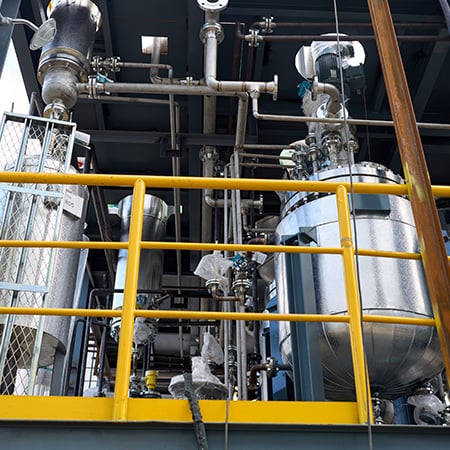
Preface
In the fields of fine chemicals, synthetic leather, pharmaceuticals, and electronic materials, there is a solvent hailed as the "universal solvent" — N,N-dimethylformamide (DMF). With its outstanding dissolving power and thermal stability, DMF has become an indispensable "industrial seasoning" across a wide range of industrial scenarios, including polyurethane synthetic leather production, acrylic fiber spinning, pharmaceutical intermediate synthesis, and electronic cleaning.However, DMF's high boiling point ( 153°C) and complete miscibility with water pose a significant challenge for the treatment of spent solvent in the industry. Direct incineration not only wastes valuable solvent resources but also generates substantial carbon emissions and hazardous waste disposal costs. Against this backdrop, DMF distillation recovery technology is evolving from an "option" to a "necessity," emerging as a critical enabler for chemical enterprises to reduce costs, improve efficiency, and drive green transformation.
Core Pain Points
DMF distillation recovery presents several unique technical challenges:
Hydrolysis and Thermal Deterioration: In water-containing streams, acids or bases can accelerate DMF hydrolysis to dimethylamine and formic acid. Elevated temperatures and prolonged exposure can also promote deterioration; conditions must be selected for the actual feed.
Water Removal and High-Purity Separation: DMF and water generally do not form an azeotrope. Achieving low water content and high purity nevertheless requires suitable theoretical stages, reflux and fraction collection conditions.
Impurity Diversity: Waste liquor often contains salts, oligomers, dyes, monomers, and various other impurities, adding complexity to the separation process.
Integrated Solutions
To address these challenges in DMF distillation recovery, YHCHEM offers the following solutions:
For thermal deterioration — Vacuum distillation lowers boiling temperature, while controlled residence time helps protect product quality. Overall energy consumption must account for reflux, heat recovery and vacuum-system requirements.
For water removal — Suitable theoretical stages, reflux and pressure, combined with temperature monitoring and separate fraction collection, enable separation of water and DMF.
For impurities — Control evaporation duty, reflux and vapor velocity, and use appropriate entrainment-reduction measures to limit heavy impurities in the product. Bottom residues are discharged as designed.
Process Route
In vacuum batch distillation, the feed is heated to boiling in the still and operated under total reflux until stable. Reflux and fraction collection are then adjusted according to composition and quality requirements:
Stage 1: Collect the water-rich heads fraction.
Stage 2: Collect the water/DMF transition fraction separately for evaluation and possible reprocessing.
Stage 3: Collect the DMF product fraction once it meets specifications. Fraction switching should use overhead temperature at stable pressure together with composition and water analyses, rather than temperature rise alone. Final purity must be confirmed analytically.
Core Advantages
High-Vacuum Sealed Design — Provides reliable vacuum integrity for the entire DMF vacuum distillation system.
Temperature Monitoring and Coordinated Control — Coordinate heating duty, pressure, reflux and withdrawal to maintain stable operation and reduce localized overheating and DMF deterioration.
Automation Control — Lowers the operator workload with integrated PLC control that monitors system temperature and pressure in real time, reducing operational difficulty and intensity while ensuring smooth, orderly process execution.
Typical Case Study
A synthetic leather enterprise had DMFcontaining wastewater (approximately 30% DMF content) and sought to recover the DMF for reuse, requiring industrial-grade quality (purity ≥ 99.9%, water content < 0.05%).
After treatment through YHCHEM's distillation system, the recovered DMF achieved a purity of 99.92% with a water content of 0.03%, exceeding the client's expectations.
For streams containing heavy residues, fouling components or viscous material, a thin-film evaporator may improve residue handling and solvent recovery. Adding one does not automatically guarantee a specified purity or water content. Performance requires process testing, and electronic-grade suitability requires verification against the customer’s complete specifications.
[Technical review: Confirm the project reference, analytical methods and reported values against test or acceptance records before publication. These results are case-specific, not universal guarantees.]

 EN
 AR
 BG
 HR
 DA
 NL
 FI
 FR
 DE
 EL
 HI
 IT
 JA
 KO
 NO
 PL
 PT
 RO
 RU
 ES
 SV
 TL
 ID
 SR
 UK
 HU
 TH
 TR
 GA
 BE
 BN


