
1. Overview of Acrylic Acid Acrylic acid (AA) is an important unsaturated organic acid and a fundamental chemical monomer. Its molecular structure contains both a carboxyl group and a carbon-carbon double bond, giving it high chemical reactivity. It ...
Share
Acrylic acid (AA) is an important unsaturated organic acid and a fundamental chemical monomer. Its molecular structure contains both a carboxyl group and a carbon-carbon double bond, giving it high chemical reactivity.
It is widely used in the production of superabsorbent polymers, acrylic esters, adhesives, coatings, emulsions, and various functional polymer materials.
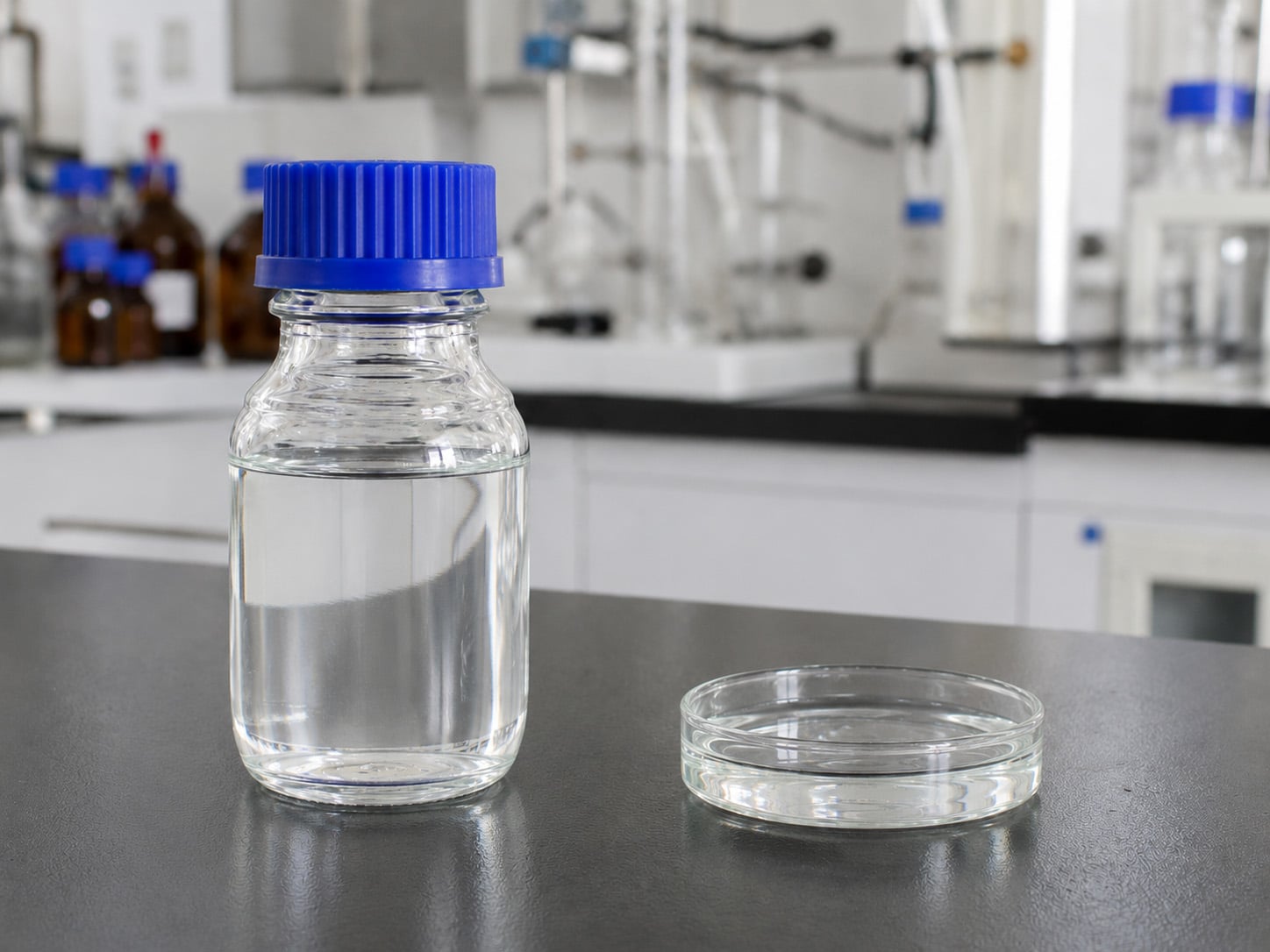
Industrial acrylic acid is mainly produced through the catalytic oxidation of propylene or acrolein. Crude acrylic acid typically contains water, acetic acid, formic acid, acetaldehyde, acrolein and other low-boiling impurities, as well as maleic acid/maleic anhydride, benzaldehyde, acrylic acid dimers and other high-boiling by-products. Depending on the production process, trace impurities such as propionic acid and furfural may also need to be controlled.
Acrylic acid has an atmospheric boiling point of approximately 141°C and is also a highly polymerizable monomer. Elevated temperatures, insufficient inhibitor control, localized overheating or impurity contamination can all increase the risk of unwanted polymerization.
Therefore, acrylic acid purification is not simply about increasing product purity. A reliable process must simultaneously address the removal of low-boiling impurities, recovery of acrylic acid from heavy residues, and polymerization control throughout the entire purification system.
For high-purity glacial acrylic acid (GAA), product purity is generally targeted at above 99.5%, with strict requirements for moisture, color and inhibitor content.
Crude acrylic acid may contain water, acetic acid, formic acid and various aldehyde impurities with different volatilities. Simple evaporation can remove part of the light components, but it is difficult to consistently control residual acids, aldehydes and moisture in the final product.
This becomes particularly important when acrylic acid is used in downstream polymerization. Even trace impurities may affect product purity, color, polymerization behavior and final polymer quality.
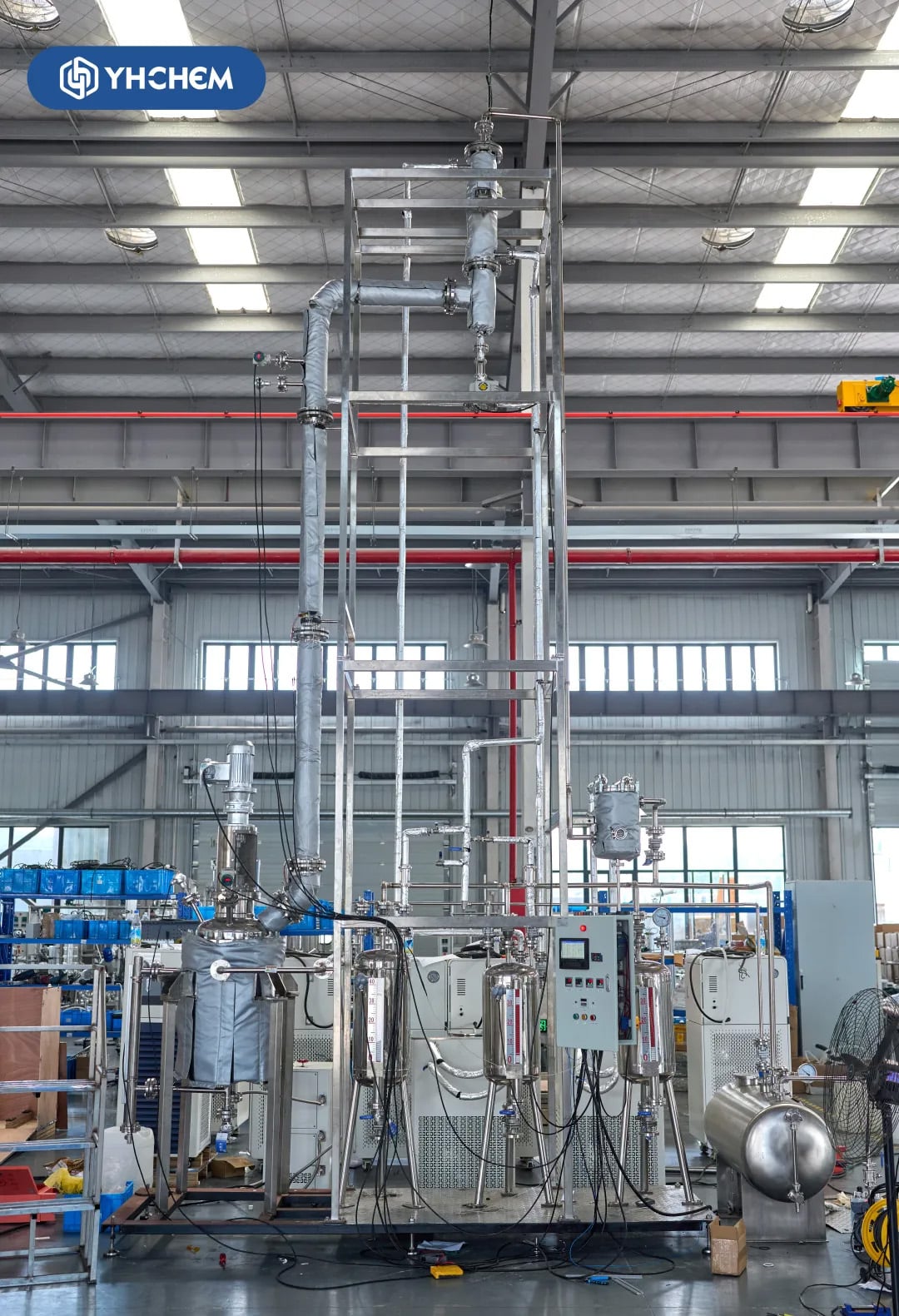
YHCHEM uses staged vacuum distillation to separate water and low-boiling impurities according to differences in volatility. By combining low-pressure-drop packing, optimized reflux control and low liquid holdup, the system improves separation efficiency while reducing the residence time of acrylic acid in high-temperature zones.
For feedstocks with relatively high moisture content or more complicated impurity profiles, additional dehydration or pretreatment units can also be incorporated into the process.
In conventional batch distillation processes, acrylic acid may remain in the reboiler and column bottom for extended periods. When local temperatures become too high or inhibitor conditions become unstable, acrylic acid may undergo dimerization or polymerization. The resulting polymers can deposit on heat exchangers, packing and pipelines, causing reduced heat-transfer efficiency, increased pressure drop, fouling and even blockage.
Vacuum operation is used to reduce the evaporation temperature of acrylic acid, while continuous feeding and discharge together with a low-holdup system design help shorten its residence time in high-temperature areas.
The system can also integrate inhibitor dosing, temperature monitoring, vacuum control and abnormal-temperature interlocks. By coordinating temperature, vacuum level, residence time and inhibitor conditions, the process reduces polymerization risks from both the process and equipment design perspectives.
As distillation proceeds, maleic compounds, acrylic acid dimers, oligomers and other high-boiling impurities gradually accumulate in the column bottom. Continuously heating this heavy residue not only increases energy consumption, but can also accelerate dimerization and polymerization. However, directly discharging the residue may result in a significant loss of recoverable acrylic acid.
A wiped film evaporator is installed downstream of the distillation system for deep recovery of acrylic acid from the heavy residue. The rotating wiper distributes the material into a thin and uniform film over the heated surface. Residual acrylic acid can therefore evaporate rapidly within a short residence time, while dimers, oligomers and other high-boiling residues are continuously discharged from the heavy-phase outlet.
Distillation for main purification + Wiped film evaporation for residue recovery
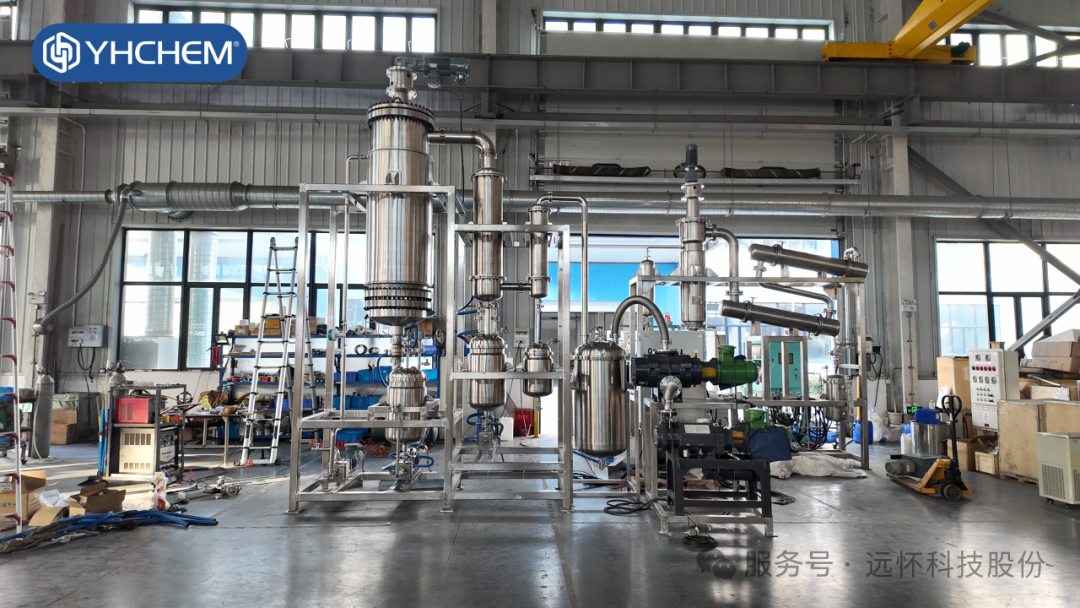
Instead of forcing the distillation column to continuously evaporate the increasingly concentrated bottom residue, the wiped film evaporator provides a more suitable method for recovering valuable acrylic acid while minimizing prolonged thermal exposure.
Considering the characteristics of acrylic acid—including easy polymerization, complex impurity composition and difficult treatment of high-boiling residues—YHCHEM proposes an integrated continuous purification process:
Feed Pretreatment → Vacuum Light-Ends Removal / Dehydration → Acrylic Acid Distillation → Wiped Film Residue Recovery → Product Condensation & Stabilization
The combination of vacuum distillation and wiped film evaporation enables different impurities to be treated in dedicated process stages.
Before purification, the feed composition, moisture content, low-boiling impurities, high-boiling components and inhibitor conditions are analyzed. Depending on the characteristics of the actual material, filtration, preheating and inhibitor dosing systems can be configured to provide stable feed conditions for downstream distillation.
Vacuum operation lowers the separation temperature of the system. Through multistage gas-liquid mass transfer inside the distillation column, water, acetic acid and other low-boiling components can be effectively removed.
The reflux ratio, feed position and internal column load are optimized to achieve efficient light-component separation while minimizing the time acrylic acid spends in high-temperature zones.
After removal of light components, the material enters the main purification column. Acrylic acid purity is further improved through coordinated control of vacuum level, reflux ratio, liquid holdup and reboiler heat load.
For special feedstocks containing relatively high levels of near-boiling impurities such as propionic acid, the purification route should be specifically designed according to the feed GC composition and target product specifications rather than simply increasing temperature or reflux ratio.
The high-boiling residue discharged from the distillation column bottom continuously enters the wiped film evaporator. The wiper forms the material into a uniform thin film, significantly improving heat and mass transfer.
Recoverable acrylic acid in the residue is rapidly evaporated and condensed, while dimers, oligomers, polymers and other high-boiling impurities are discharged from the heavy-phase outlet.
The main purpose of this stage is to recover valuable acrylic acid from the column-bottom residue, reduce raw-material losses and minimize the polymerization risks associated with prolonged heating in the reboiler.
Purified acrylic acid is condensed and transferred into the product storage tank. Inhibitor concentration and storage conditions can be controlled according to the required product specifications.
The complete system can be equipped with monitoring and interlock functions for temperature, pressure, vacuum, cooling and inhibitor supply. In the event of abnormal temperature rise, vacuum fluctuations or cooling-system failure, corresponding protective measures can be activated to improve the safety and reliability of continuous operation.
Pretreatment → Vacuum Light-Ends Removal / Dehydration → Distillation
The main objective is to control moisture, acetic acid and other low-boiling impurities so that the acrylic acid meets the requirements of downstream esterification or conventional polymerization processes.
Fine Light-Ends Removal → Vacuum Purification Distillation → Wiped Film Residue Recovery → Product Stabilization
The process can be designed for an acrylic acid purity target of 99.5% or higher, while providing tighter control over moisture, low-boiling impurities and product color.
For applications with stricter requirements for trace impurities such as propionic acid, aldehydes and maleic compounds, the purification process can be customized according to the feed GC composition, target purity and required processing capacity.
Lower Temperature and Shorter Residence Time. Vacuum distillation reduces the operating temperature, while wiped film evaporation minimizes the thermal exposure of heavy residues. This helps reduce dimerization, polymerization and equipment fouling.
Staged Separation of Light and Heavy Impurities. The front-end distillation section removes water and low-boiling impurities, while the downstream wiped film evaporator recovers acrylic acid from high-boiling residues. Each separation unit performs the task for which it is most suitable.
Higher Acrylic Acid Recovery. Valuable acrylic acid remaining in the column-bottom residue can be further recovered, reducing raw-material losses associated with the discharge of heavy components.
Dedicated Polymerization Inhibition and Safety Control. Inhibitor dosing, temperature, vacuum and residence time can be managed as an integrated system specifically designed around the polymerization characteristics of acrylic acid.
Integrated Continuous Processing. Distillation, wiped film evaporation, condensation, vacuum, temperature control and automation can be integrated into a complete system suitable for process development, pilot-scale verification, scale-up and continuous industrial production.
A new materials manufacturer in Jiangsu was experiencing difficulties during the purification of crude acrylic acid containing maleic compounds, acrylic acid dimers, oligomers and other high-boiling impurities.
The original process used batch vacuum distillation. To improve acrylic acid recovery, the column-bottom residue had to be continuously heated for extended periods.
As the concentration of heavy components increased, acrylic acid remained under high-temperature conditions for longer periods. This gradually led to polymer deposition, reduced heat-transfer efficiency, equipment fouling and pipeline blockage. At the same time, a considerable amount of recoverable acrylic acid was discharged together with the heavy residue, while frequent shutdowns were required for equipment cleaning.
To address the problems of long high-temperature residence time and poor recovery from heavy residues, YHCHEM upgraded the process to:
Vacuum Distillation Column + Wiped Film Evaporator
The vacuum distillation column performs the main separation of acrylic acid from water, acetic acid and other low-boiling impurities. The high-boiling residue from the column bottom is then continuously transferred to the wiped film evaporator, where residual acrylic acid rapidly evaporates from a thin film and is recovered through condensation.
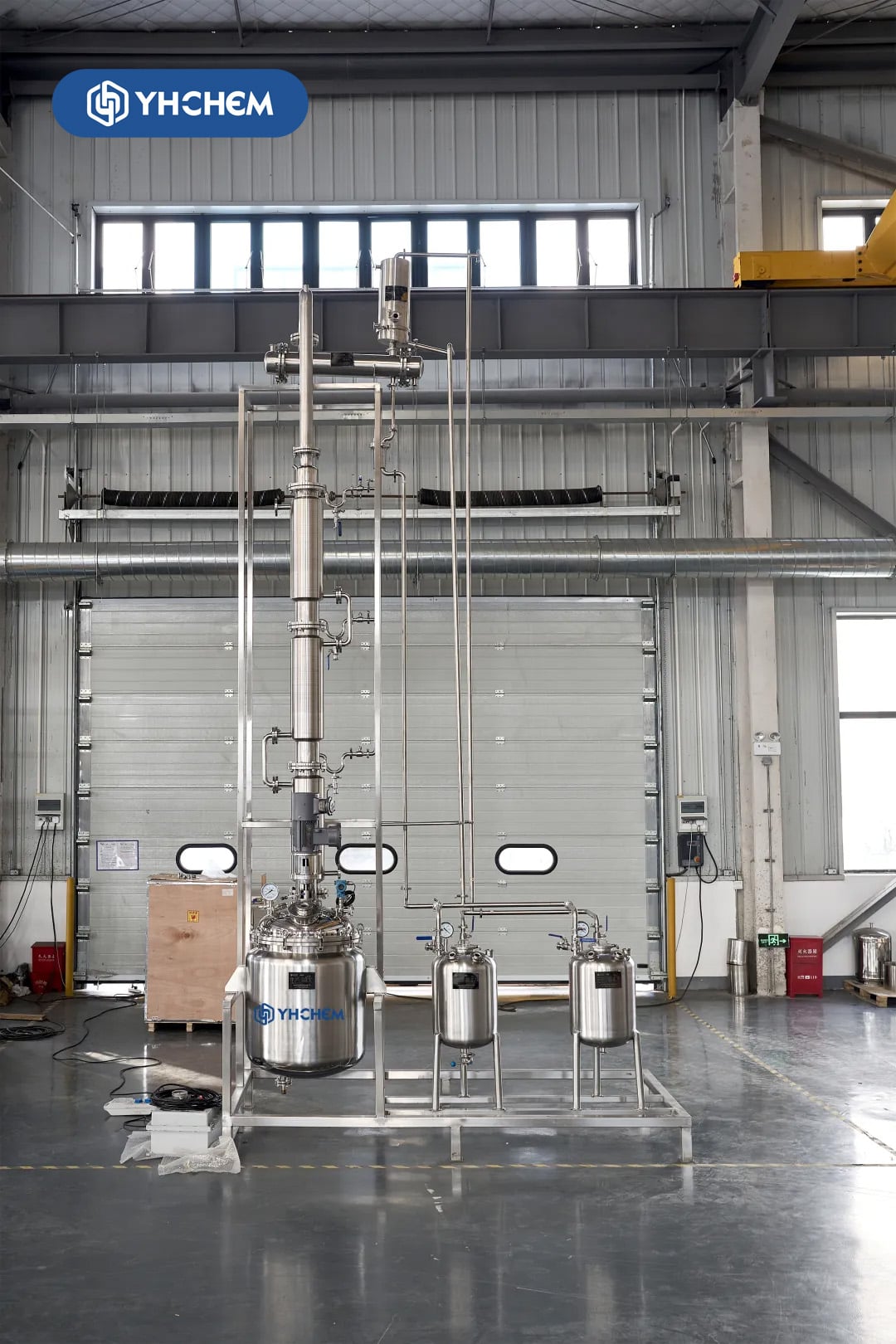
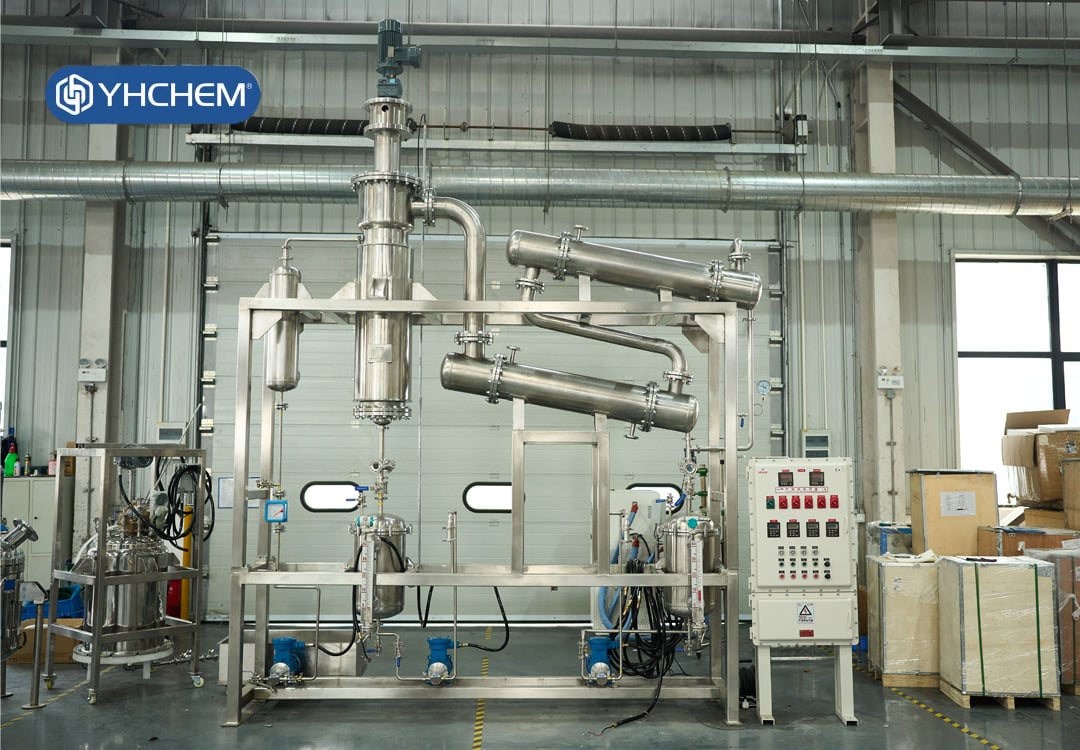
Dimers, oligomers and polymer residues are discharged from the heavy-phase outlet. The system also incorporates inhibitor, temperature and vacuum control to further reduce polymerization risks.
After process optimization, the risks of material polymerization and equipment fouling were significantly reduced. The acrylic acid purity could be maintained within the target range of 99.5% or higher. Valuable components in the heavy residue were further recovered, equipment cleaning frequency was reduced, and the stability of continuous operation was improved.
The key to acrylic acid purification is not only achieving higher product purity. More importantly, the process must provide stable separation of low-boiling impurities, high-boiling residues and valuable acrylic acid while minimizing polymerization risks.
By combining vacuum distillation, wiped film evaporation and dedicated polymerization-inhibition safety control, YHCHEM separates different impurity groups in dedicated processing stages.
This approach helps shorten high-temperature residence time, reduce acrylic acid losses from column-bottom residues, improve product quality and enhance the continuous operating capability of the overall system.
YHCHEM can provide integrated process and equipment solutions for acrylic acid purification, high-boiling residue recovery, high-purity acrylic acid production, pilot-scale testing and continuous process scale-up.

 EN
EN
 AR
AR
 BG
BG
 HR
HR
 DA
DA
 NL
NL
 FI
FI
 FR
FR
 DE
DE
 EL
EL
 HI
HI
 IT
IT
 JA
JA
 KO
KO
 NO
NO
 PL
PL
 PT
PT
 RO
RO
 RU
RU
 ES
ES
 SV
SV
 TL
TL
 ID
ID
 SR
SR
 UK
UK
 HU
HU
 TH
TH
 TR
TR
 GA
GA
 BE
BE
 BN
BN


