
 EN
 AR
 BG
 HR
 DA
 NL
 FI
 FR
 DE
 EL
 HI
 IT
 JA
 KO
 NO
 PL
 PT
 RO
 RU
 ES
 SV
 TL
 ID
 SR
 UK
 HU
 TH
 TR
 GA
 BE
 BN
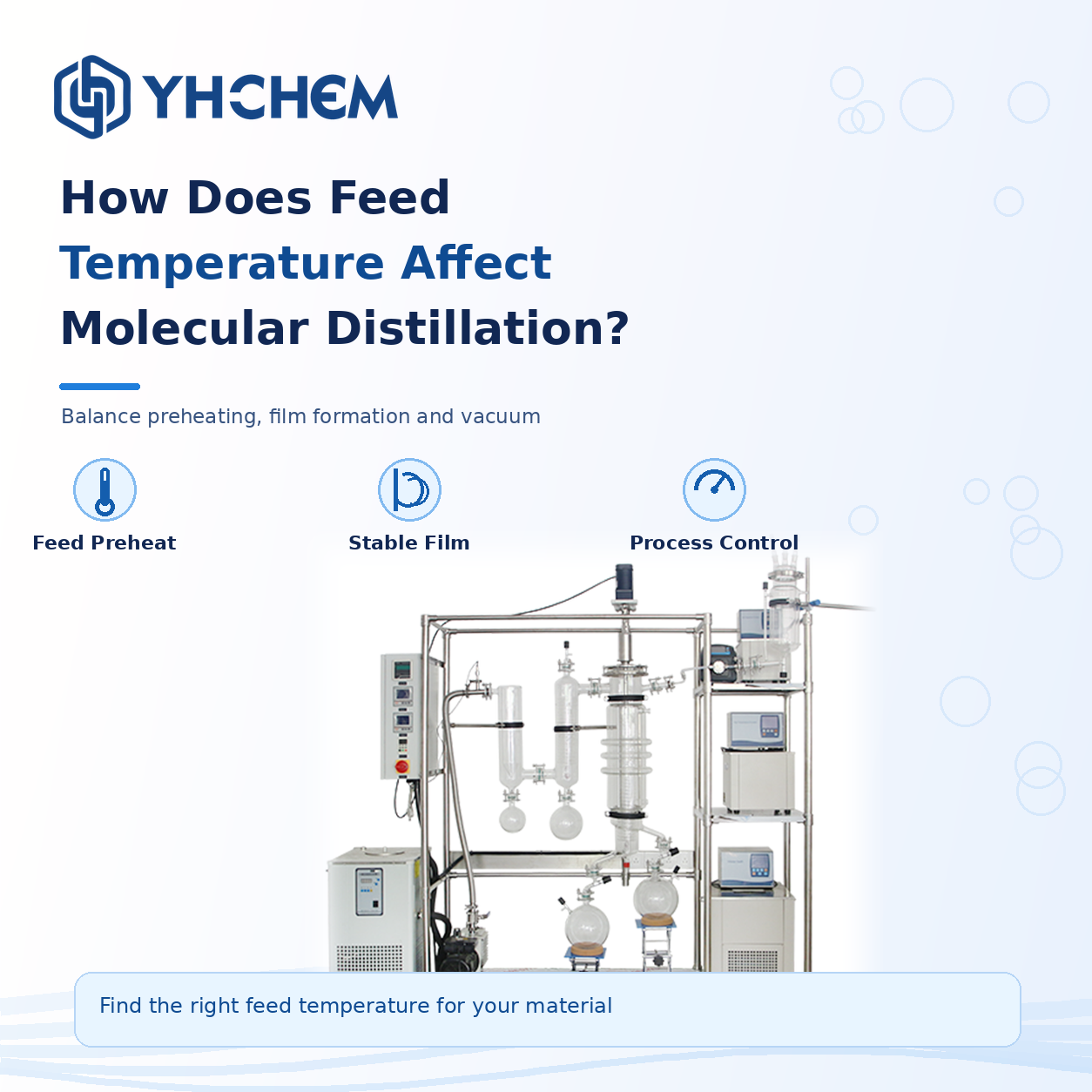
Feed temperature affects how readily a material flows into a molecular distillation unit, how evenly it forms a film, and how much heat the evaporating surface must supply. Moderate preheating can reduce viscosity and improve process stability. However, hotter feed is not always better: excessive preheating may trigger premature flashing under vacuum, increase vapor load, or expose heat-sensitive components to unnecessary thermal stress. The best feed temperature is a validated operating range, coordinated with actual operating pressure, evaporation-surface temperature, feed rate and material stability.
1. Why Feed Temperature Matters
Molecular distillation relies on a thin, continually renewed liquid film and a short vapor path under high vacuum. Feed entering the heated zone must be distributed and warmed rapidly enough to achieve the intended separation. If the feed is very cold or highly viscous, the inlet may experience uneven distribution and the available residence time may be spent largely heating the liquid instead of evaporating the target fraction. Appropriate upstream conditioning can therefore improve consistency without requiring a higher evaporator setting.
2. Do Not Confuse Feed, Evaporation and Heating-Medium Temperatures
Feed temperature is the temperature of the liquid entering the evaporator. The evaporation-surface temperature refers to the heat-transfer surface or the effective liquid-film temperature, while the heating-medium temperature is the temperature of circulating oil or another heating fluid. These temperatures are not identical. Pressure, wall thermal resistance, film thickness, feed load and heat-transfer conditions create temperature differences. Recording only the heater setpoint cannot describe the actual thermal history of a material.
3. What Happens When Feed Temperature Is Too Low?
Cold feed may have higher viscosity and poorer flowability. The distributor and wiper then face a more difficult task in spreading a continuous film. More of the available heat is consumed by sensible heating, so the film may not reach the temperature needed for the desired volatile fraction to evaporate during its short passage. Operators may observe weak distillate formation, unstable film coverage or a tendency to raise the heating setpoint. However, increasing wall temperature is not the only solution: controlled feed preheating or a lower feed rate may be more appropriate.
4. Why Excessively Hot Feed Can Also Be a Problem
A feed that is heated too aggressively before entering deep vacuum may release dissolved gases, water or light solvents abruptly. Premature flashing at the inlet can disturb distribution, create foam or entrainment, and temporarily increase pressure. Heat-sensitive resins, oils and fine-chemical intermediates may also discolor or degrade if they spend too long in a hot holding tank or transfer line. Feed preheating is therefore about reducing unnecessary temperature differences—not heating every material close to its maximum allowable temperature.
5. Feed Temperature, Viscosity and Film Formation
Viscosity typically changes with temperature, but the response depends on the feed. Preheating may make a silicone oil, resin or oligomer easier to pump and distribute; yet as lighter fractions evaporate, the remaining liquid can become more viscous down the film. Evaluate both inlet viscosity and the likely viscosity of the concentrated residue. Stable film formation depends on wiper design and speed, liquid load, surface condition and viscosity together. The optimum feed temperature cannot be separated from those variables.
6. Feed Temperature and Operating Vacuum Must Be Matched
The relevant vacuum is the pressure the system can sustain while material is actually flowing. Warmer feed can introduce additional vapor load, especially when residual solvent or water is present. If pressure rises markedly when feeding begins, confirm feed composition and vapor handling before assuming the pump is defective. Upstream degassing, solvent removal, suitable condensation and sufficient line conductance may resolve the issue more effectively than simply increasing pumping capacity.
7. When Is Pretreatment Better Than More Preheating?
A feed containing a substantial amount of low-boiling solvent presents a different problem from a largely solvent-free high-boiling oil. For solvent-rich streams, a preliminary evaporation or degassing step may be appropriate before high-vacuum molecular distillation. Wiped film evaporation can be evaluated for continuous solvent removal or pre-concentration. Molecular distillation can then address the higher-value fractionation step with a more manageable vapor load. Whether a two-stage route is worthwhile depends on the actual feed and target composition.
8. A Practical Trial Procedure for Selecting Feed Temperature
First, characterize the material: composition, residual solvent or water, viscosity versus temperature and known thermal limits. Next, establish a stable operating vacuum and select a conservative evaporator setting appropriate to the target volatility. Keep feed rate, wiper speed and condenser conditions as constant as practicable while testing a small number of feed-temperature settings. At each condition, record inlet temperature, operating pressure, heater settings, distillate rate, light/heavy fraction mass balance, color or other degradation indicators, and analytical purity. Compare repeatable product outcomes rather than judging success from one temperature reading.
9. Common Signs That Feed Temperature Needs Adjustment
Warning signs include an uneven or highly viscous inlet stream, weak distillate collection at otherwise appropriate conditions, sudden pressure spikes at start-up, flashing or foaming near the feed point, color change during prolonged preheating, or a large gap between heating-medium settings and observed separation results. None of these signs identifies a single cause on its own. Check the combined pressure–temperature–flow picture and verify the material with a controlled test.
10. Material-Specific Considerations
For silicone oils, examine viscosity and the intended removal of volatile siloxanes; avoid assuming that a single preheating temperature fits every molecular-weight distribution. For resins and polyurethane oligomers, consider viscosity growth, residence time and thermal sensitivity. For natural extracts and fragrance fractions, monitor aroma, color and possible component losses as well as distillation yield. Material-specific evaluation is more useful than copying one temperature setpoint from a different application.
11. Use Trial Data Before Scale-Up
Once a practical range is found, verify the result at representative feed rates and collect a useful material balance. Scale-up may change heat-up time, thermal hold-up, piping losses and vacuum load. A repeatable laboratory or pilot trial gives a stronger basis for equipment design than selecting a feed temperature from the material name alone.
Frequently Asked Questions (FAQ)
Should the feed be heated before molecular distillation?
Often, moderate preheating is useful when it improves pumping, distribution or heat-up. It is not automatically necessary for every feed; the required setting depends on viscosity, composition and thermal stability.
Is a higher feed temperature always more efficient?
No. Beyond a useful range, extra preheating may increase flashing, vapor load or thermal exposure without improving fraction quality.
Why does the vacuum become worse with hot feed?
Warm feed can release dissolved gases and volatile components more rapidly. Check solvent content, inlet flashing, condensation, line conductance and pumping capacity under load.
Should feed temperature equal the evaporator temperature?
Not necessarily. The feed inlet, evaporating film and heating medium are different temperature locations and should be evaluated separately.
How can the correct feed temperature be confirmed?
Run controlled trials across a limited range while comparing operating pressure, film behavior, distillate rate, mass balance and product analysis.
Conclusion / Process Evaluation
A suitable feed temperature is neither a universal number nor simply the highest temperature the material can tolerate. It is a repeatable range that improves flow and film formation without unnecessary flashing or degradation. YHCHEM can help evaluate feed information and arrange representative material testing before selecting the process configuration.
Recommended Internal Links
Table of Contents
- 1. Why Feed Temperature Matters
- 2. Do Not Confuse Feed, Evaporation and Heating-Medium Temperatures
- 3. What Happens When Feed Temperature Is Too Low?
- 4. Why Excessively Hot Feed Can Also Be a Problem
- 5. Feed Temperature, Viscosity and Film Formation
- 6. Feed Temperature and Operating Vacuum Must Be Matched
- 7. When Is Pretreatment Better Than More Preheating?
- 8. A Practical Trial Procedure for Selecting Feed Temperature
- 9. Common Signs That Feed Temperature Needs Adjustment
- 10. Material-Specific Considerations
- 11. Use Trial Data Before Scale-Up
- Frequently Asked Questions (FAQ)
- Conclusion / Process Evaluation
- Recommended Internal Links