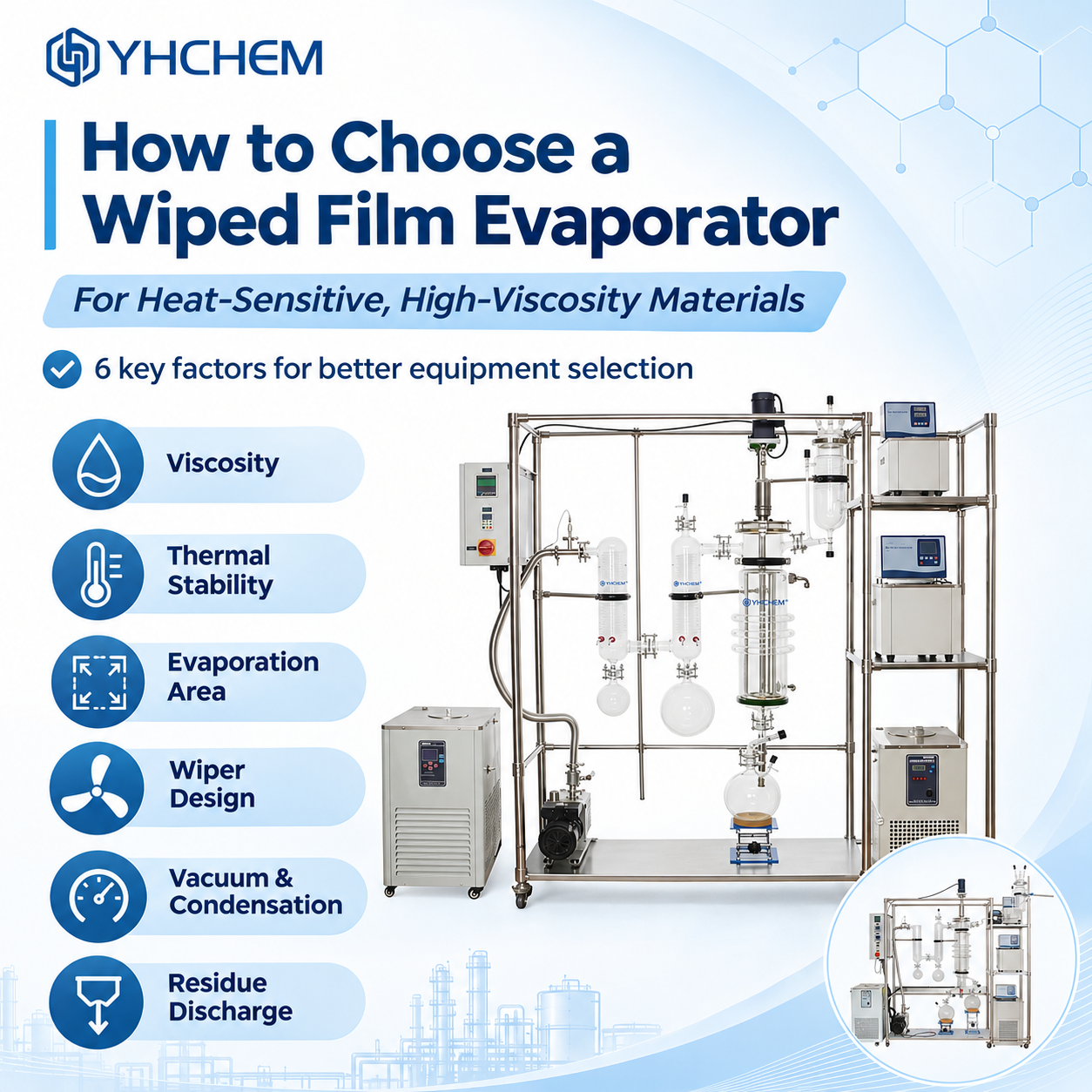
A wiped film evaporator should be selected according to the actual evaporation duty and feed properties under operating conditions—not by nominal throughput alone. For heat-sensitive or high-viscosity materials, key factors include viscosity at...
VIEW MORE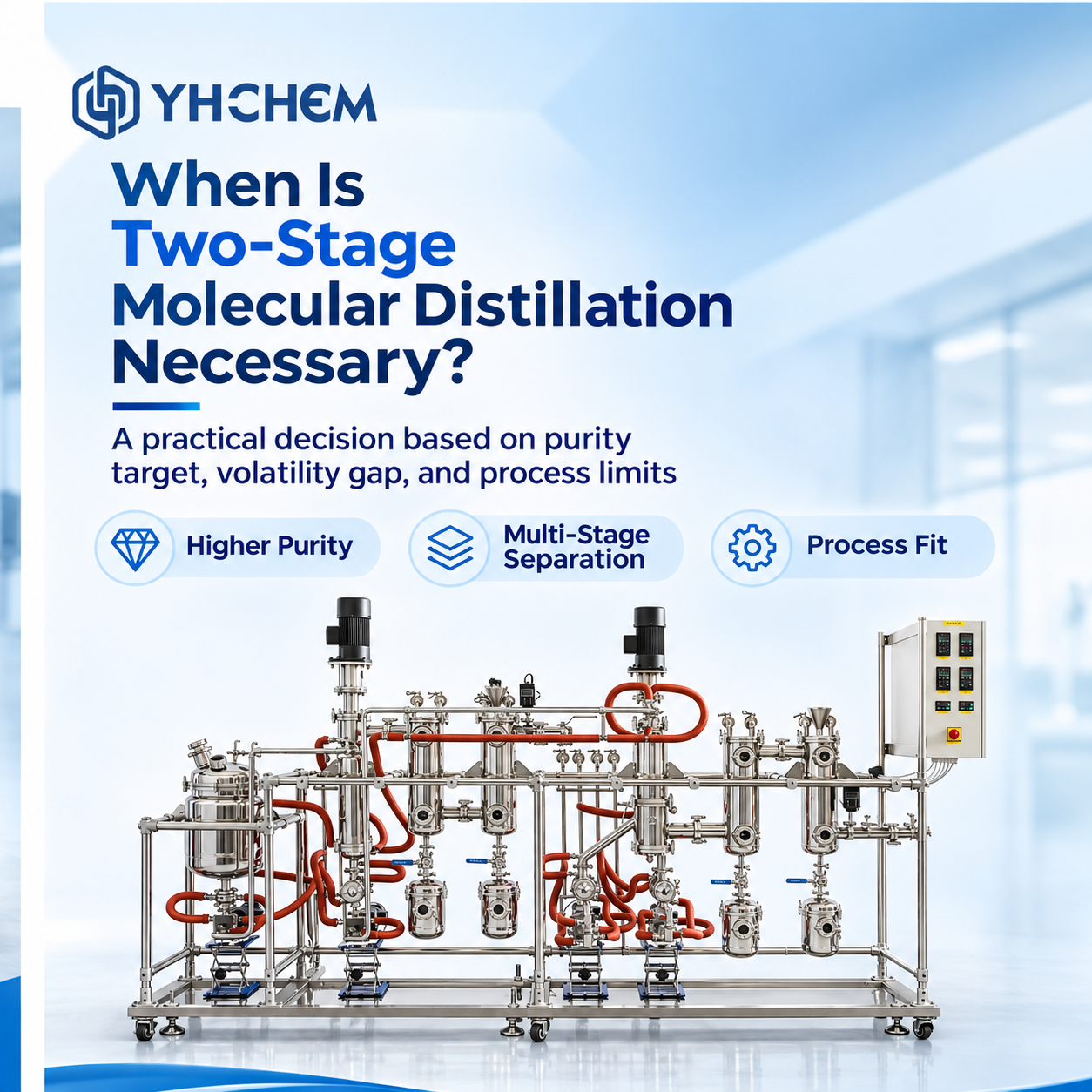
Two-stage molecular distillation is worth evaluating when one pass cannot achieve the required fraction purity, impurity removal or product recovery within a safe operating window. Different stages can be assigned different separation tasks, such as ...
VIEW MORE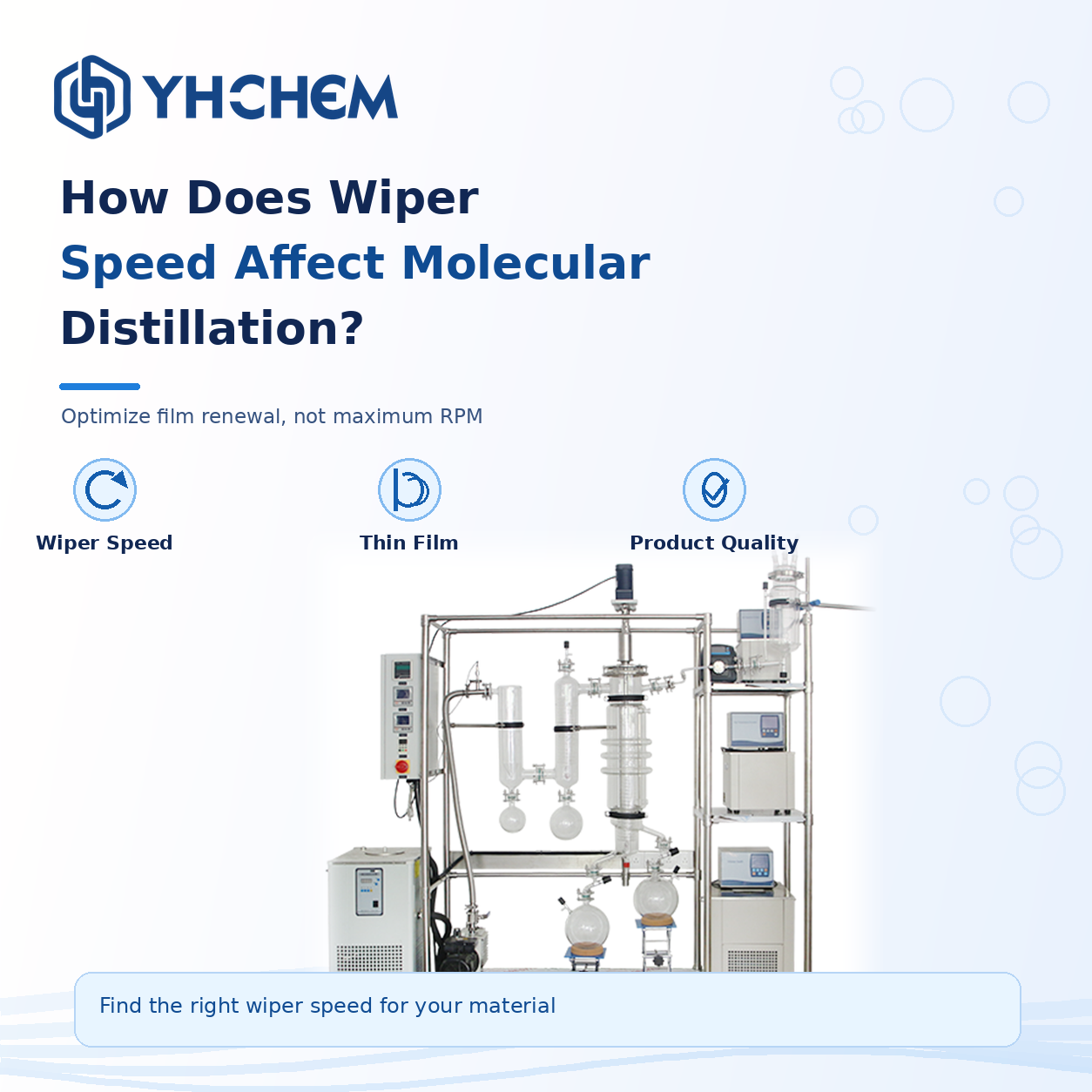
Wiper speed affects how molecular distillation feed is distributed and renewed as a thin film. It can influence heat transfer, evaporation behavior, liquid hold-up and residence-time distribution. However, higher rotational speed does not automatical...
VIEW MORE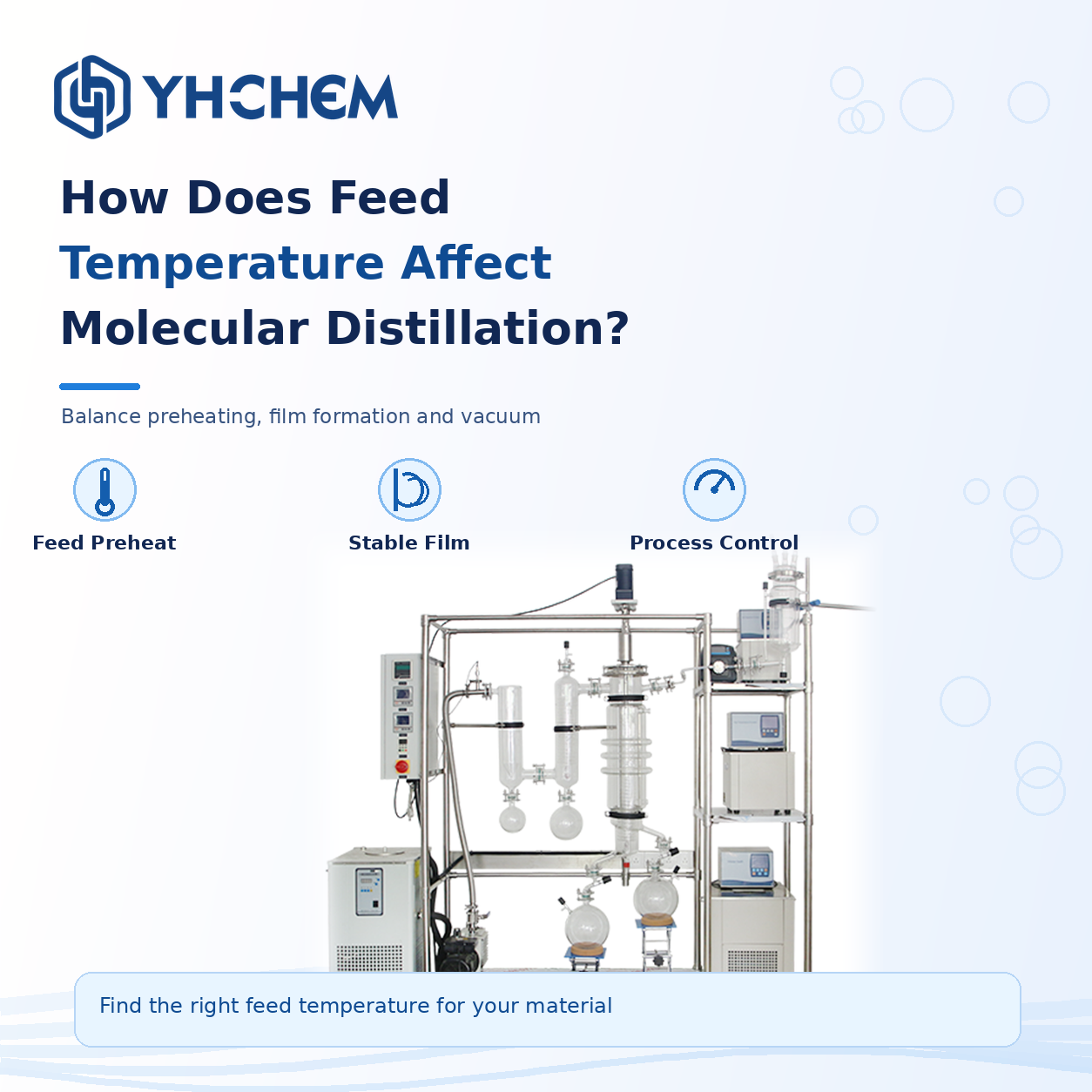
Feed temperature affects how readily a material flows into a molecular distillation unit, how evenly it forms a film, and how much heat the evaporating surface must supply. Moderate preheating can reduce viscosity and improve process stability. Howev...
VIEW MORE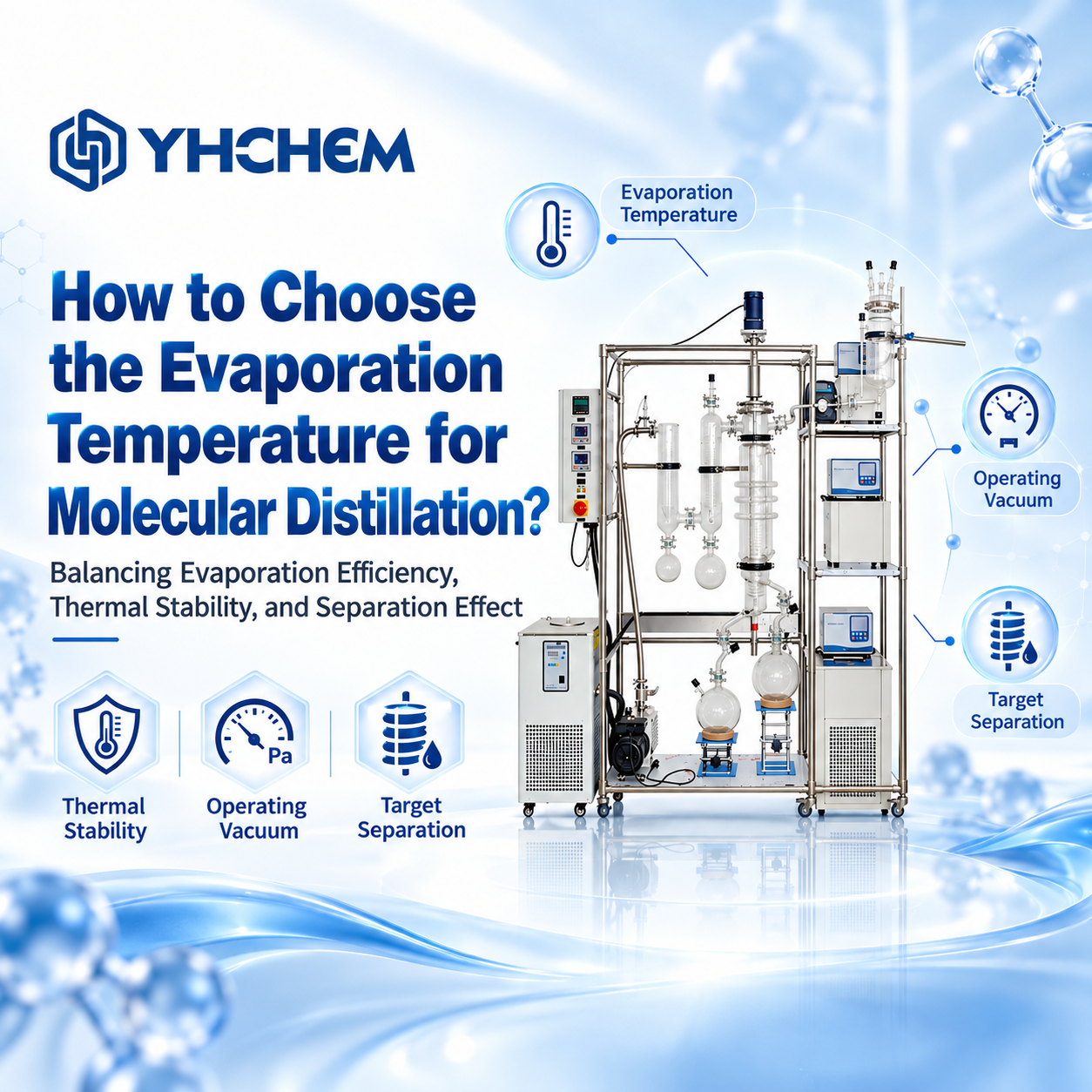
There is no single evaporation temperature that is correct for every molecular-distillation process. The useful temperature is the lowest practical temperature that gives sufficient evaporation of the target light fraction while maintaining stable va...
VIEW MORE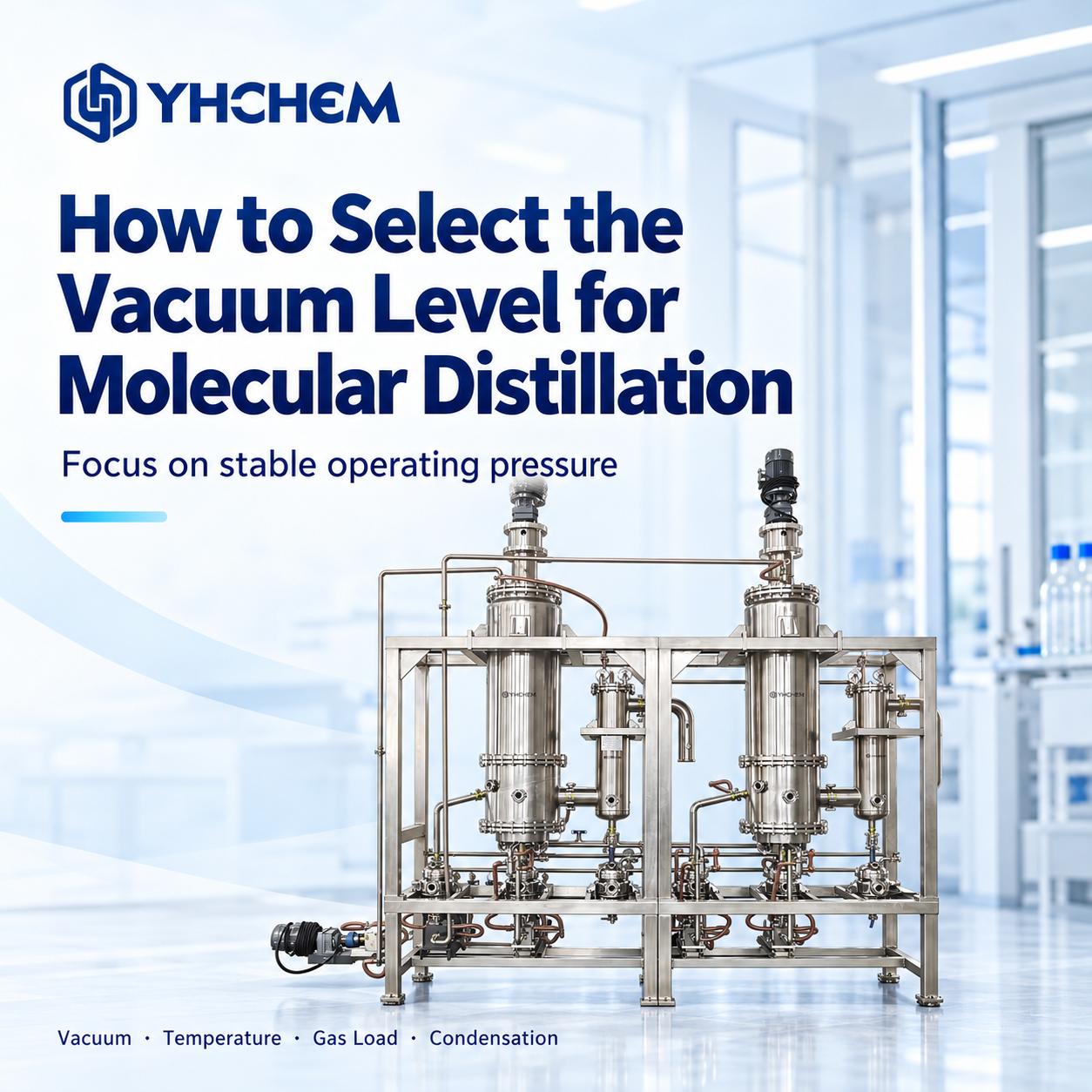
There is no single vacuum value that is correct for every molecular-distillation process. The required pressure is determined by the vapor pressure of the target component at an acceptable product temperature. Deeper vacuum generally allows evaporati...
VIEW MORE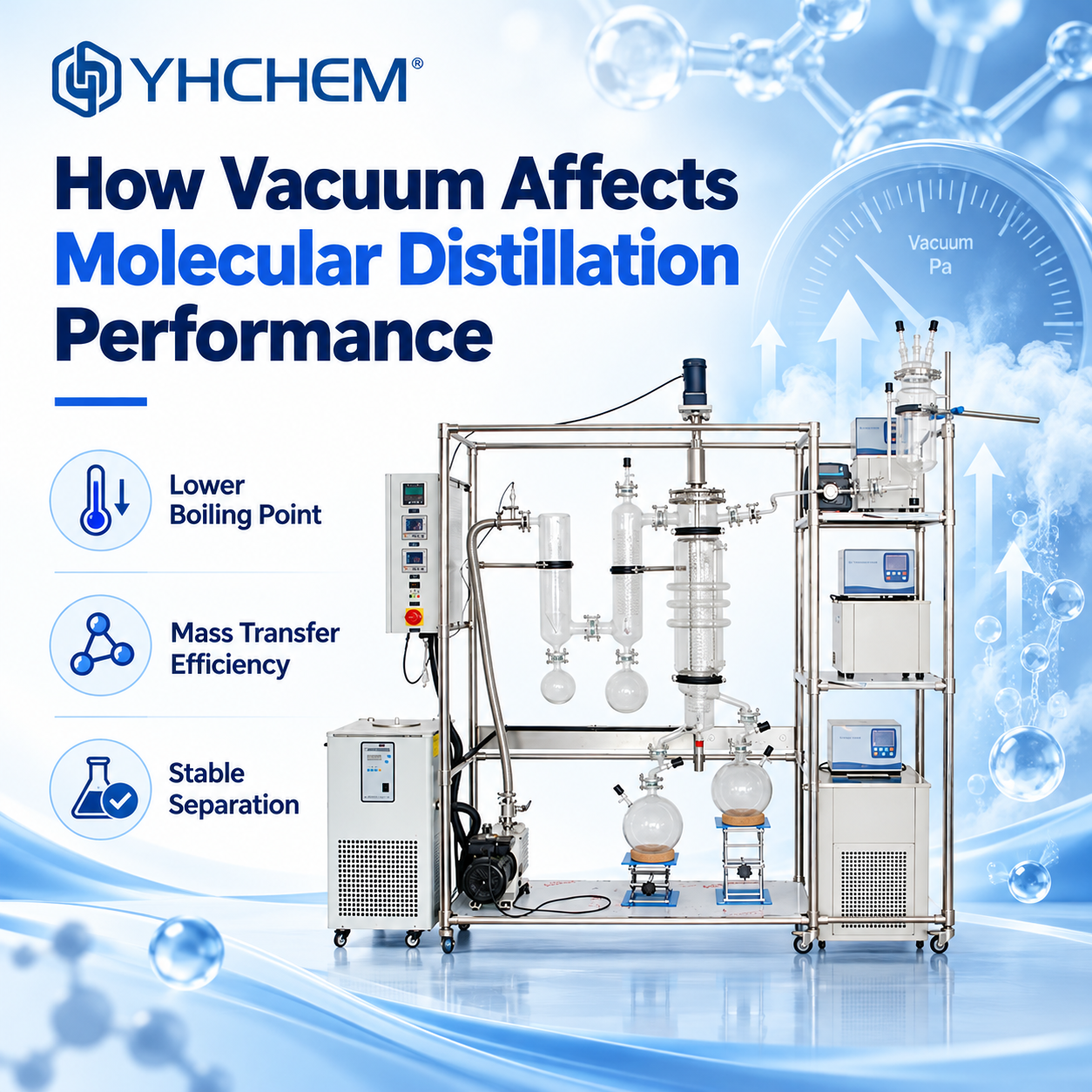
Vacuum is one of the most important operating conditions in molecular distillation. Lower absolute pressure can reduce the temperature required for volatile components to leave the liquid film and can increase the mean free path of vapor molecules, s...
VIEW MORE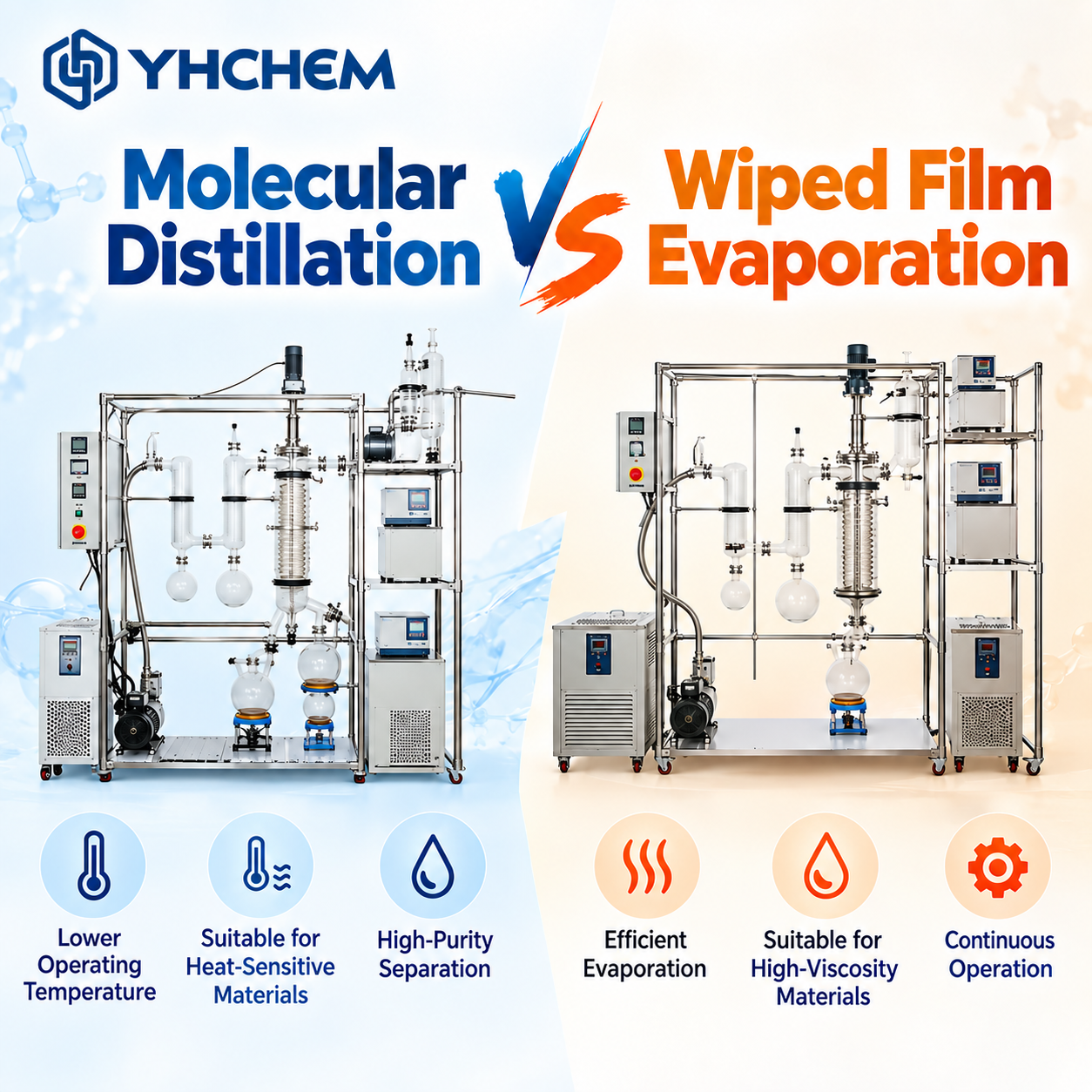
Wiped film evaporation is generally better suited to bulk solvent removal, light-end removal and concentration. Molecular distillation is more appropriate for selected high-boiling, heat-sensitive or high-value separations under deeper vacuum. F...
VIEW MORE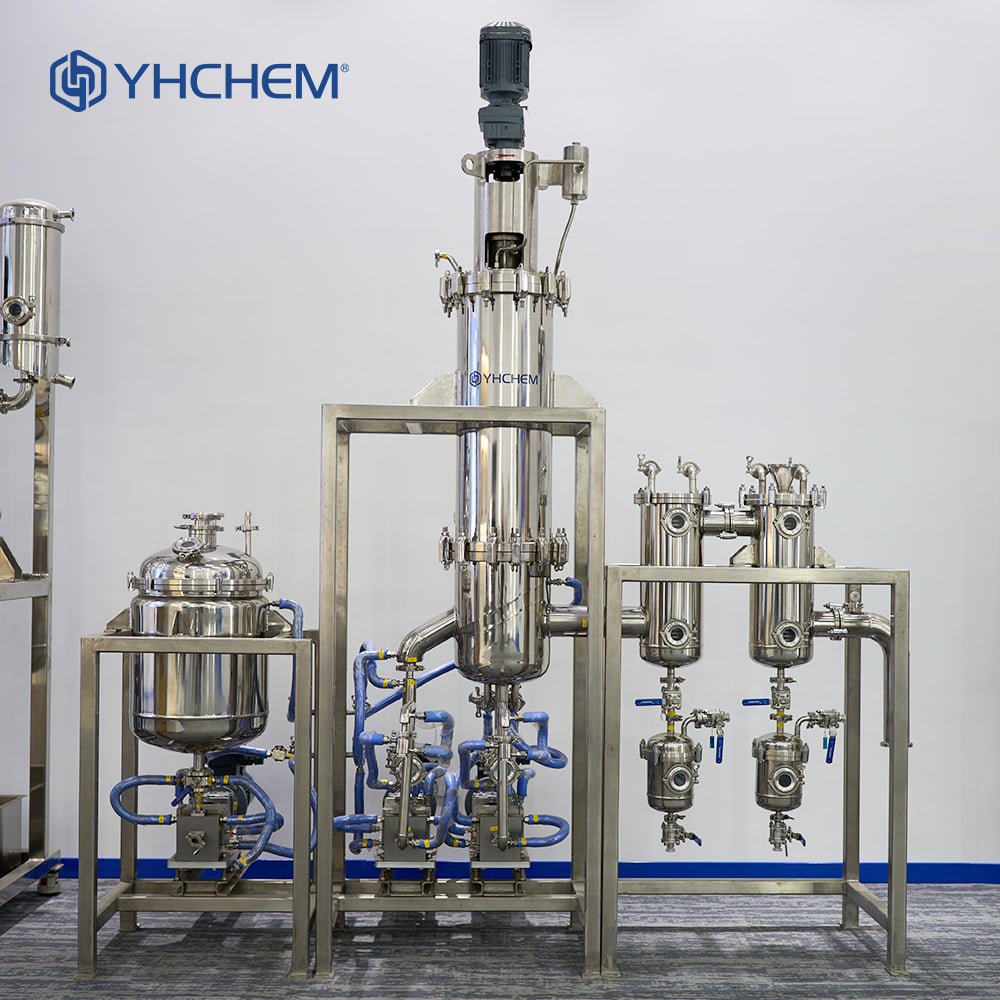
Meta Description:Discover which materials suit molecular distillation, including heat-sensitive, high-boiling and viscous feeds, and the key factors used for process selection. Direct Answer Molecular distillation is particularly suitable for high-b...
VIEW MORE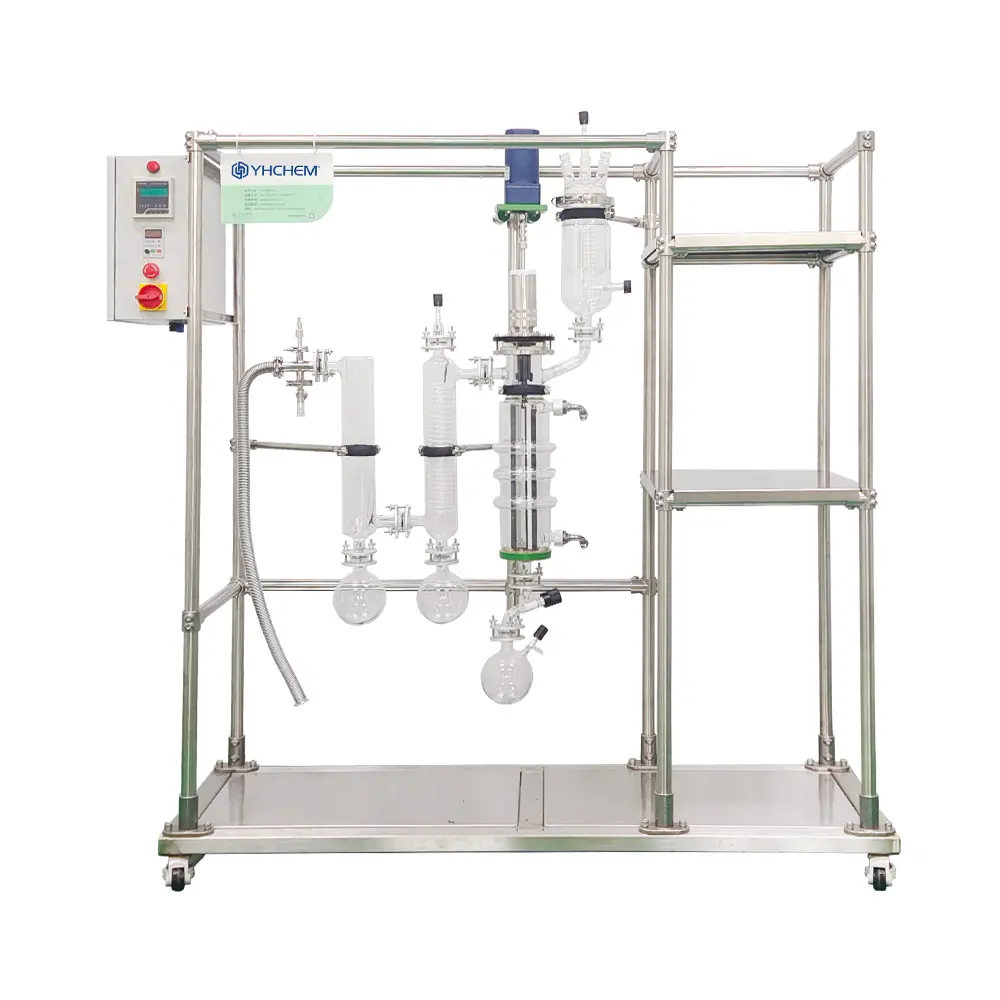
The engineering of integrated chemical processes requires not only a technical decision when choosing the best separation technology but also a strategic decision towards efficiency quality of the product and the economic sense of the processes. Thin...
VIEW MORE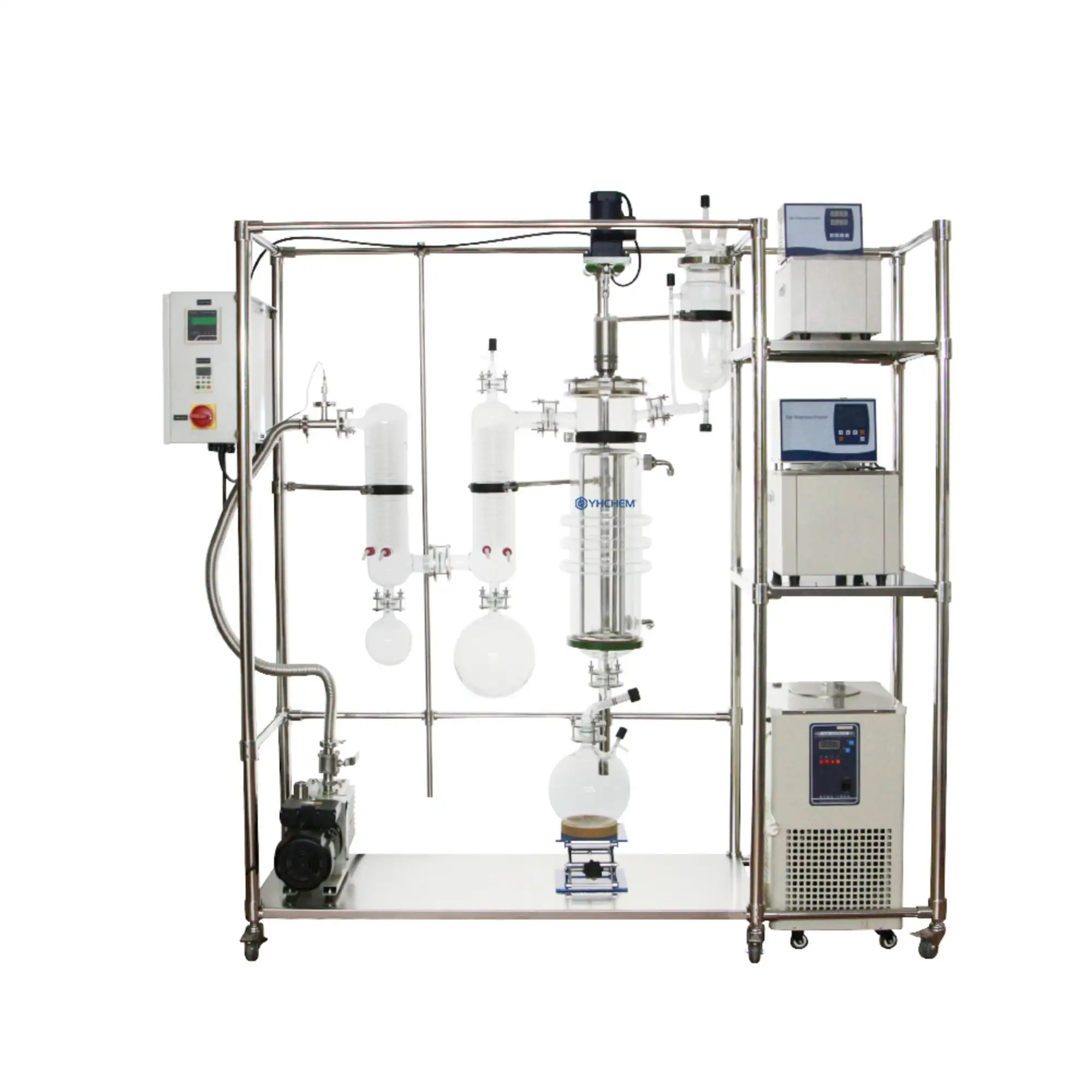
One of the process engineer issues which are sensitive in the high-grade production of the fine chemicals, pharmaceuticals, and bio-based products division is that of heat sensitivity. To discuss this very root issue at YHCHEM, we have devised a soun...
VIEW MORE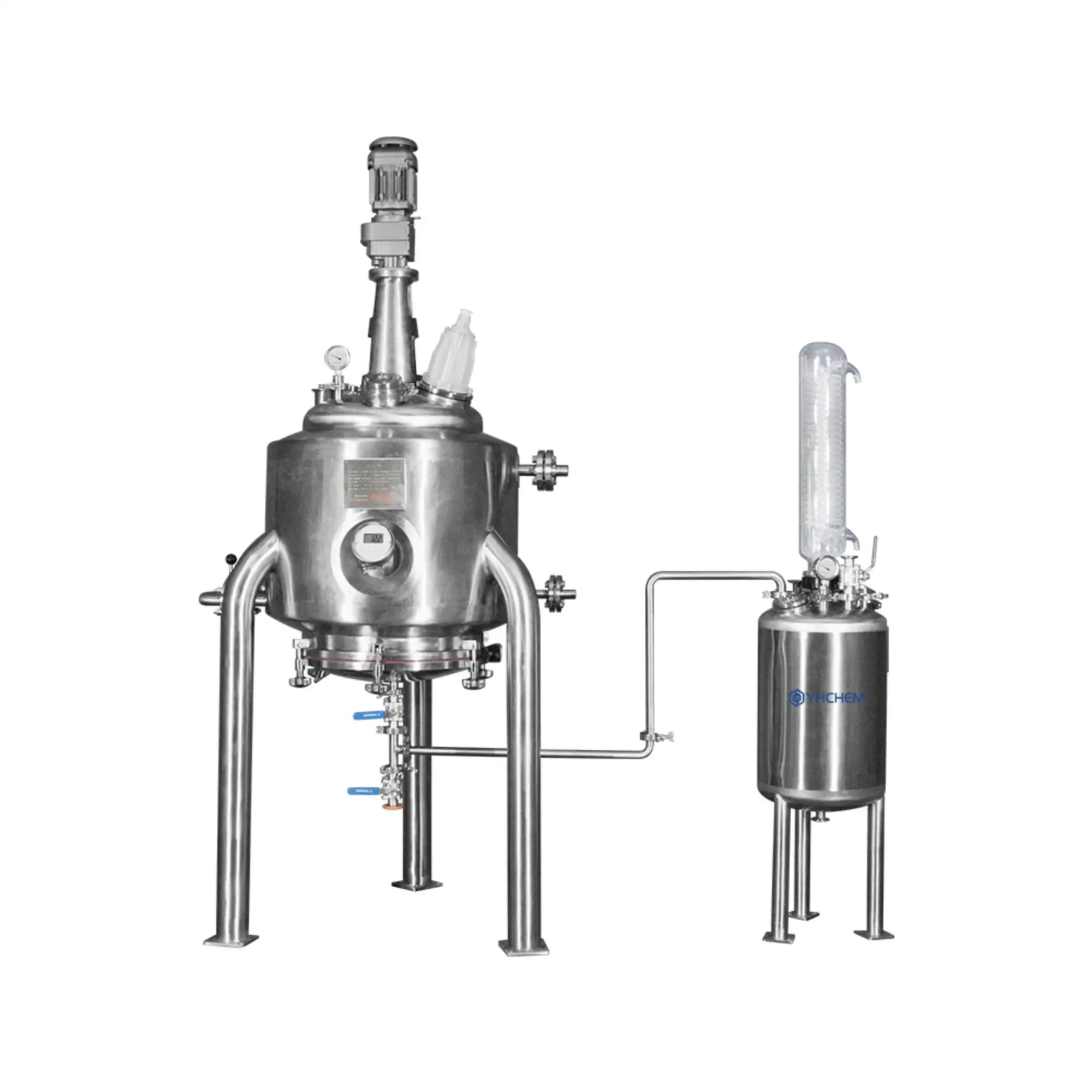
Operational efficiency and environmental stewardship are no longer considered competing priorities in the contemporary chemical processing context, rather they are core pillars of environmentally sustainable and profitable production. The solvent man...
VIEW MORE
 EN
 AR
 BG
 HR
 DA
 NL
 FI
 FR
 DE
 EL
 HI
 IT
 JA
 KO
 NO
 PL
 PT
 RO
 RU
 ES
 SV
 TL
 ID
 SR
 UK
 HU
 TH
 TR
 GA
 BE
 BN